
The word finally fits
漢字・毛筆・習字・書写
Kanji, the brush, calligraphy, handwriting class.
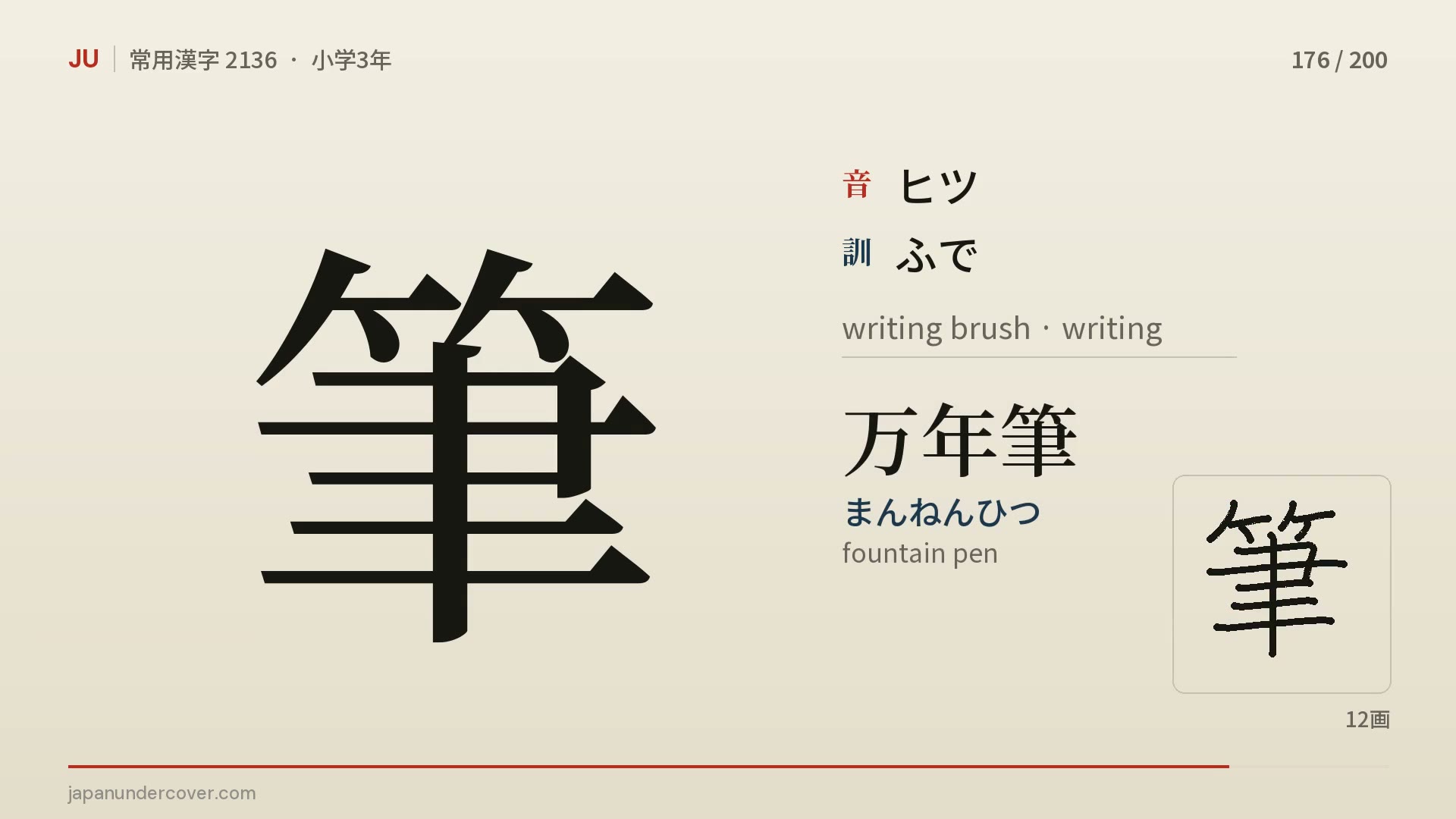
For two years a Japanese child has been learning kanji without being able to write the word. 字 arrives in first grade; 漢 waits until third. The brush is the same story: 毛 is a second-grade character, 筆 a third-grade one. 習字 and 書写, the two everyday names for calligraphy class, each need a third-grade kanji too, 習 and 写.
The list and the classroom line up. The national curriculum starts 毛筆, writing with a brush, in third grade, at about 30 class hours a year.
Life studies splits in two
Second grade's 生活, life studies, ends. In its place come 社会, social studies, at a standard 70 hours a year, and 理科, science, at 90. Field note 008 noticed that a second grader can already write both names. In third grade they finally take the classes. Japanese drops from 315 hours to 245 while the school year grows from 910 hours to 980.
The city becomes the textbook
Third-grade social studies is about the child's own city: its layout, its farms, factories and shops, the fire station and the police, and how the town has changed. Pupils get a 地図帳, a school atlas, and learn compass directions and map symbols.
A second alphabet
Romaji, Japanese written in Roman letters, is taught in third grade. The curriculum gives its reason plainly: children see it on signs and pamphlets, and they use it to type. The same year adds 外国語活動, foreign-language activities, for a standard 35 hours.
Reading runs ahead of writing
The rule for grades 3 and 4: read every kanji taught so far, write the ones from earlier grades, and learn to write the new year's characters gradually. The clip works the reading side, one character at a time.
How to use the clip
As before, each character appears alone for two beats; say it before the voice does. The readings shown and spoken are the official ones from the 2010 常用漢字表, and every example word uses only characters from grades 1 to 3.
440 down, 1,696 to go.