
The timetable test
国語・算数・生活・音楽・図画工作
Japanese, mathematics, life studies, music, arts and crafts.
A first- or second-grade timetable in Japan has eight subjects: 国語, 算数, 生活, 音楽, 図画工作, 体育, 道徳 and 特別活動. With the 240 kanji taught by the end of second grade, five of those names can be written entirely in kanji.
The other three have to wait. 体育, physical education, needs 育, a third-grade character. 道徳, moral education, needs 徳 from fourth grade, and 特別活動, special activities, needs 特 and 別 from fourth grade and 動 from third.
Then the list gets ahead of the schedule. Social studies (社会) and science (理科) do not start until third grade, yet every character in both names is a second-grade kanji. A second grader can write the names of two subjects they have not taken.
Why life studies
生活, life studies, exists only in grades 1 and 2. It arrived in 1992 in place of separate science and social studies for the youngest children, which is why those two names wait for third grade on the timetable even after the characters are ready.
The rest of a seven-year-old's day
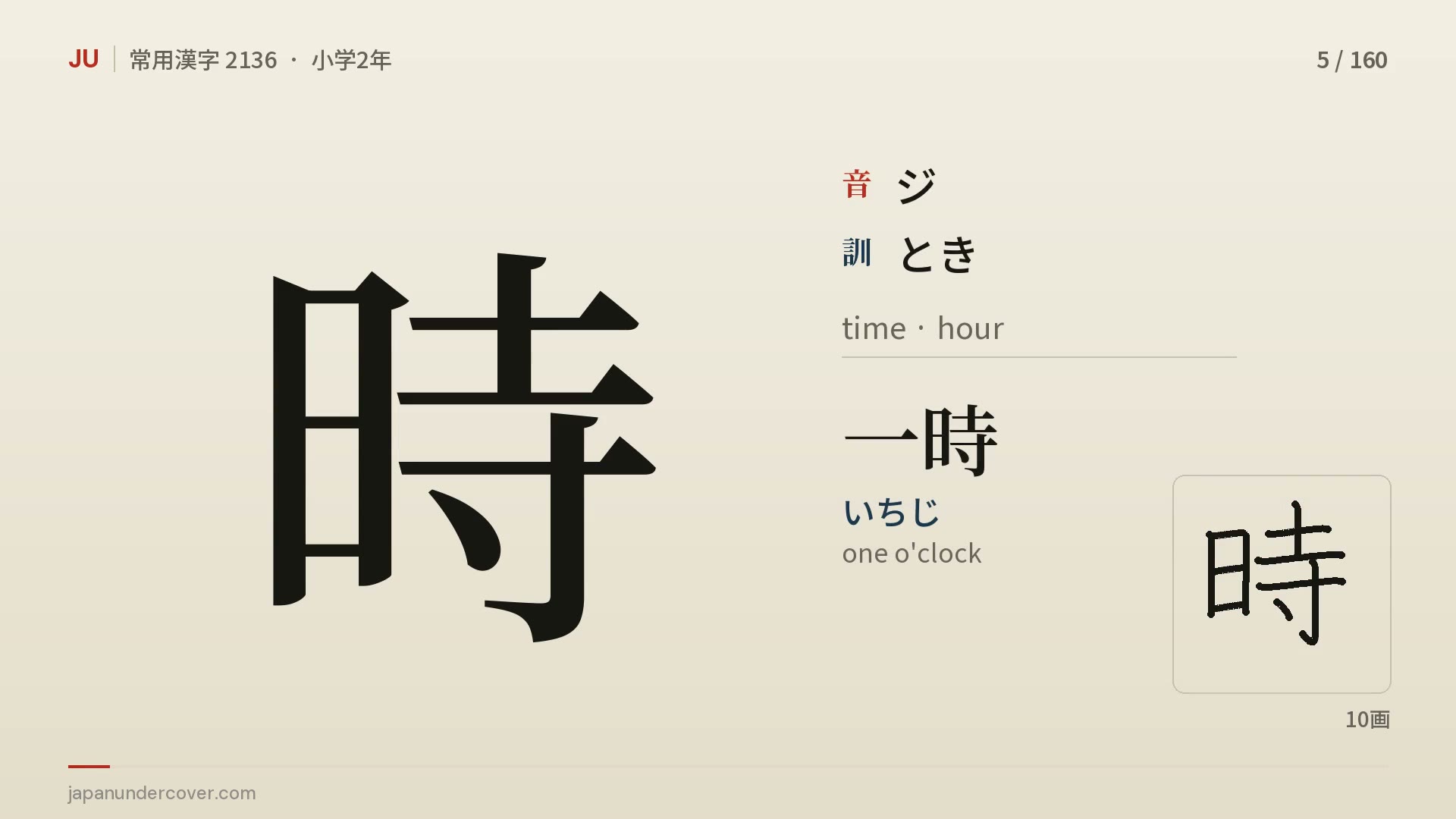
The 160 read like a child's week: the compass 東西南北, the seasons 春夏秋冬, the family 父母兄弟姉妹, the clock 時・分・午前・午後, and the days of the week through 曜 and 週.
How to use the clip
As in grade 1, each character appears alone for two beats; say it before the voice does. The readings shown and spoken are the official ones from the 2010 常用漢字表, and every example word uses only characters from grades 1 and 2.
240 down, 1,896 to go.