
The last 321
東欧 韓国 湾 憂鬱
Grade 9, in four words.
With grade 9 the list is complete: 2,136 of 2,136. The 常用漢字表 is the government's list of everyday-use kanji, and every character on it has now had a card, an official reading, an example word and live stroke order.
241 from a textbook, 80 from us
Japan sets no kanji list for each junior high year. Grade 9 follows the new-kanji tables of one 2025 junior high Japanese textbook for year 3: 241 kanji. That left 80 jōyō kanji that none of those tables covered, so we added them to this grade to end the series on exactly 2,136. That is our course design, not a claim about any school's curriculum. The 80 are inside the 321; the clip does not mark them.
The hardest card comes last
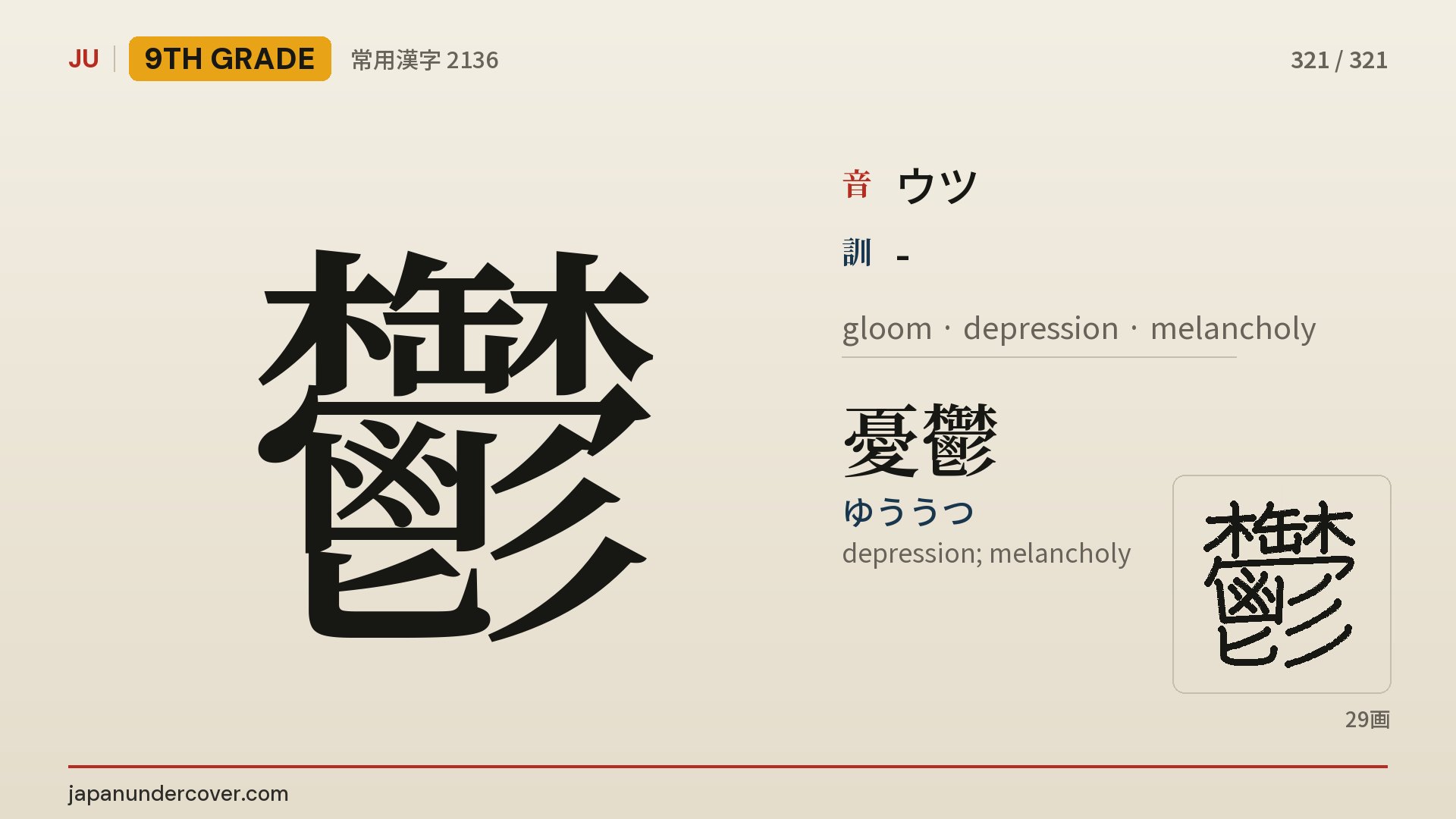
鬱 (憂鬱, depression) takes 29 strokes. The next heaviest on the whole list is 鑑, with 23. It is also the final card of the clip, so the series ends on its hardest character.
Mostly words, not characters
203 of the 321 kanji have no kun reading in the official list. 欧 appears as 東欧, 韓 as 韓国, 湾 stands alone as bay. Most of this grade only exists inside compounds, so the example word carries the card.
The list is a base, not the end
Personal names, for example, use extra kanji beyond the list. What the 2,136 give you is the standard set for everyday writing, and every character in it is now in a clip you can replay.
How to use the clip
Each character appears alone first; say it before the voice does. The kanji come in order of how common they are, so grade 9 opens with 藤 and 監 and ends on 鬱. The readings shown and spoken are the official ones from the 2010 常用漢字表, and every example word uses only kanji introduced at or before that card.
2,136 down. That is the list.