 Language
Step 1
Hiragana / Study clip
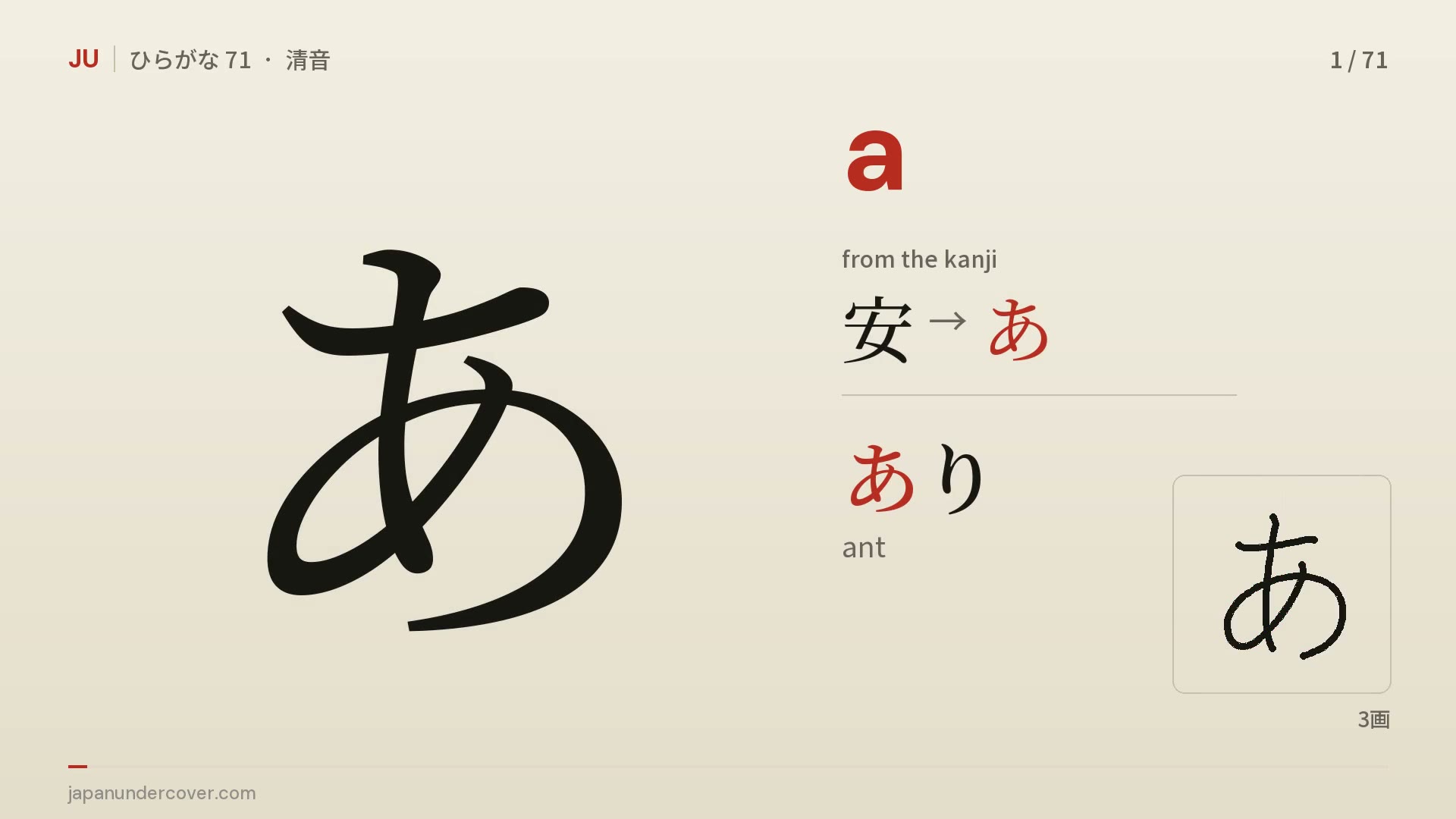
Every kana began as a kanji.
All 71 hiragana with the kanji each came from, an everyday word and stroke order.
 Japan Undercover
Context travels badly. We pack it properly.
YouTube
Learn Japanese
Eleven study pages in one order: two kana, then nine grades of kanji.
Tokyo now
Japan Standard Time
Study Japanese
In learning order: hiragana, katakana, then the jōyō kanji grade by grade. Each step has readings, example words, stroke order and a quiz; the kana and grades 1 to 7 also have a full study clip.
Complete. All 2,136 jōyō kanji, grades 1 to 9.
Language
Hiragana / Study clip
All 71 hiragana with the kanji each came from, an everyday word and stroke order.
 Language
Katakana / Study clip
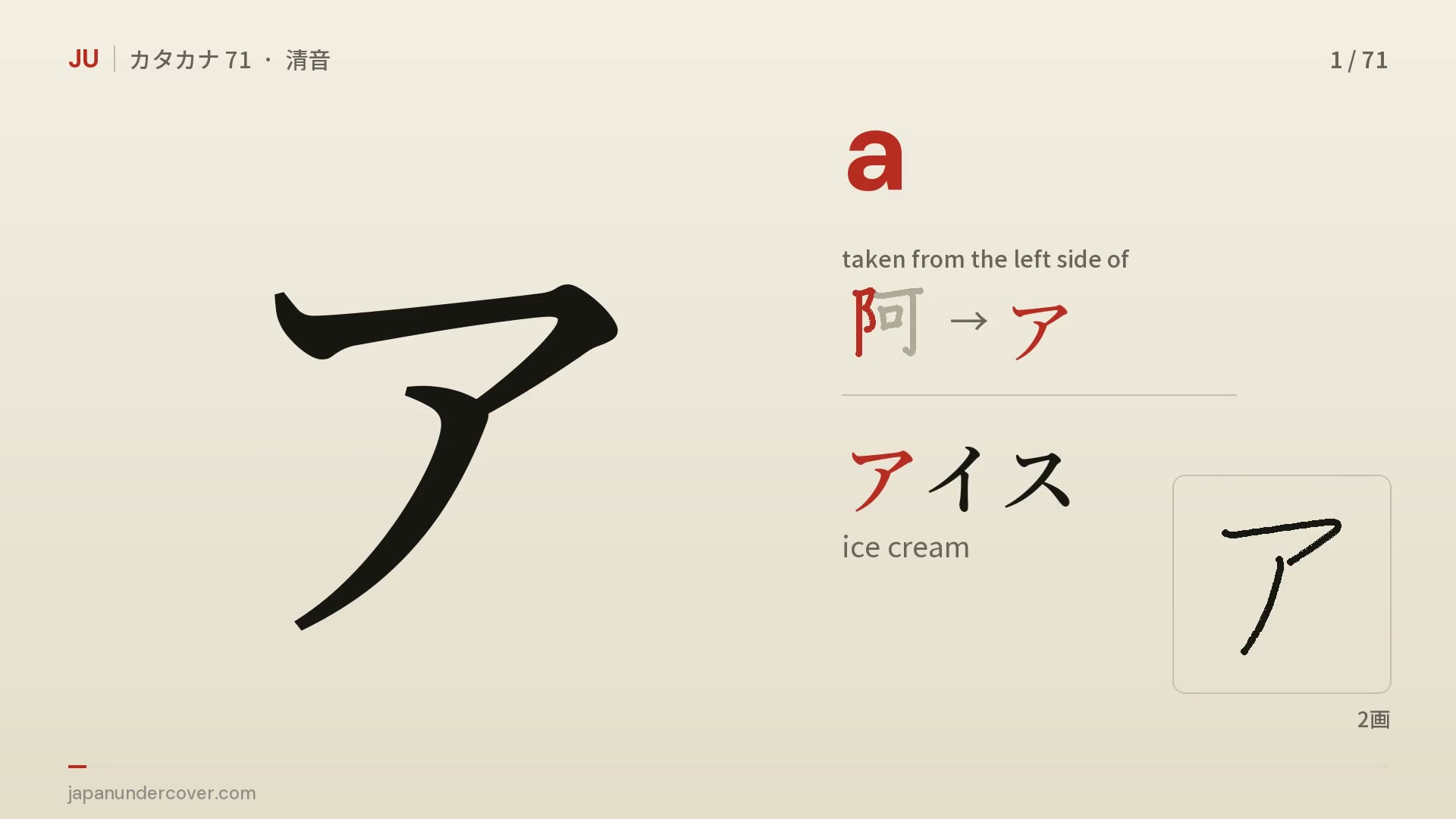
All 71 katakana with the kanji each came from, the piece it kept, an everyday word and stroke order.
 Language
Kanji / Study clip
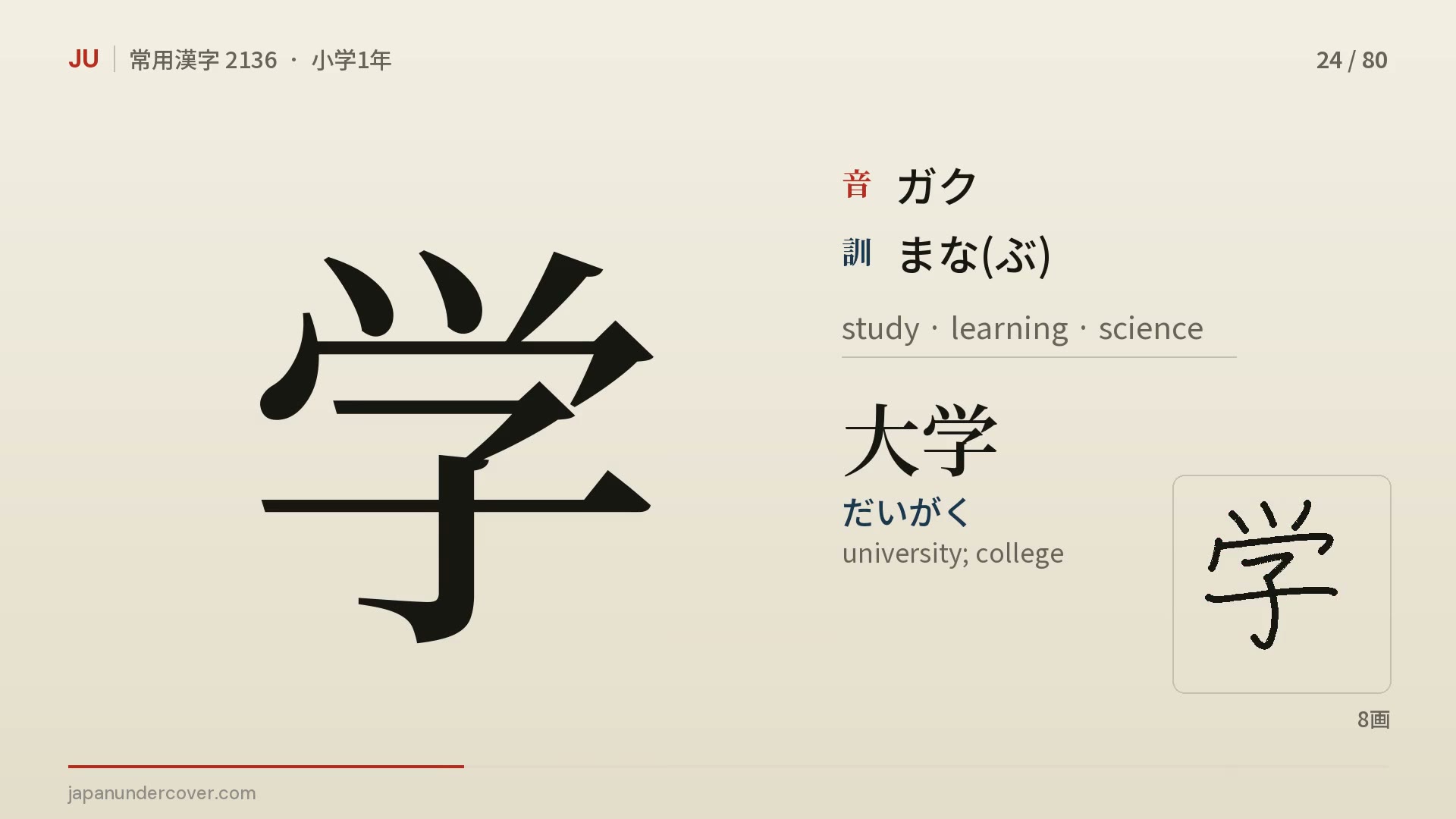
Start with the 80 kanji taught in first grade, with readings, example words and stroke order.
80kanji so far, of 2,136
 Language
Kanji / Study clip
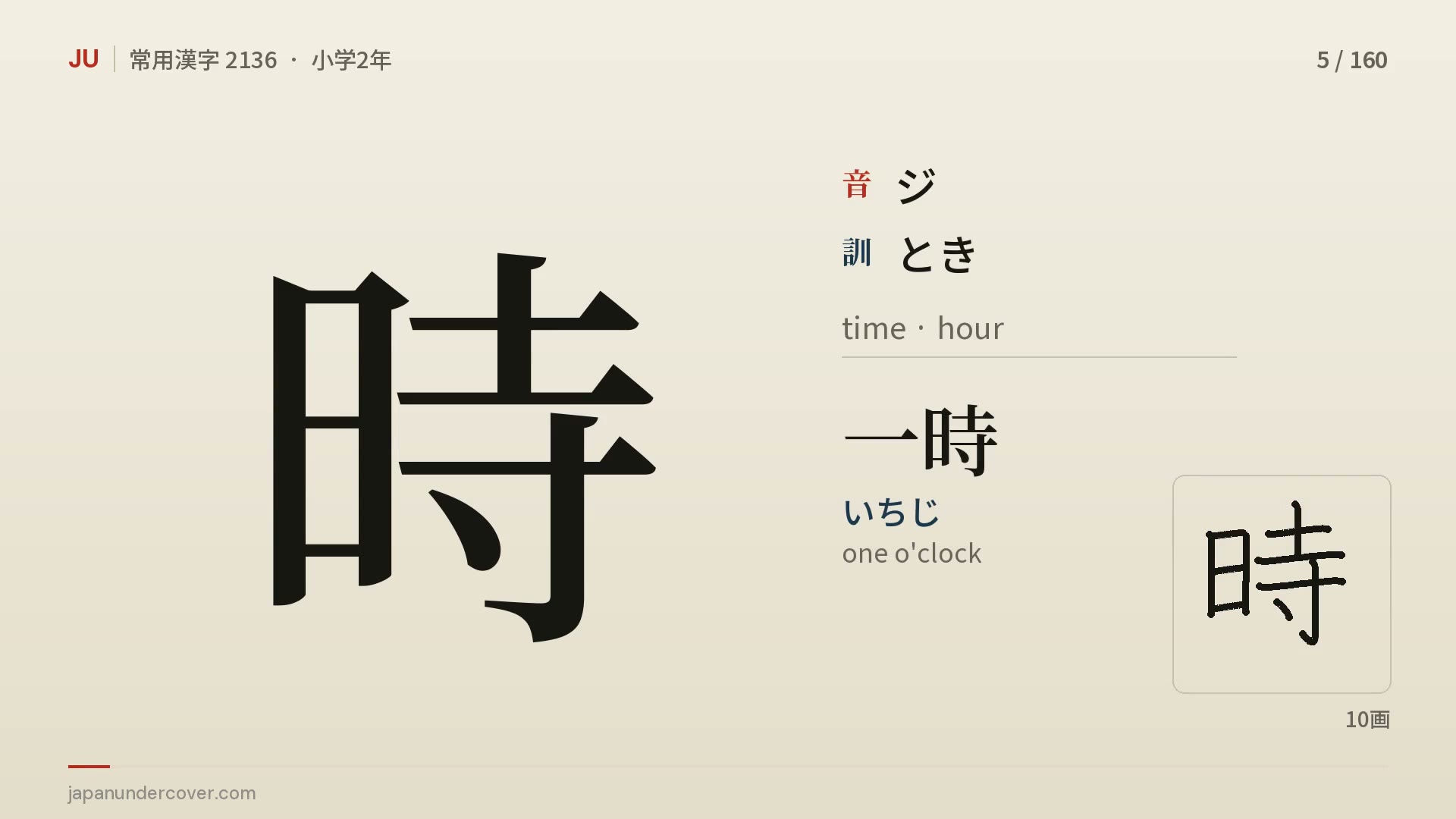
160 more kanji, 240 in all. Readings, example words and stroke order for every one.
240kanji so far, of 2,136+160 in grade 2
 Language
Kanji / Study clip
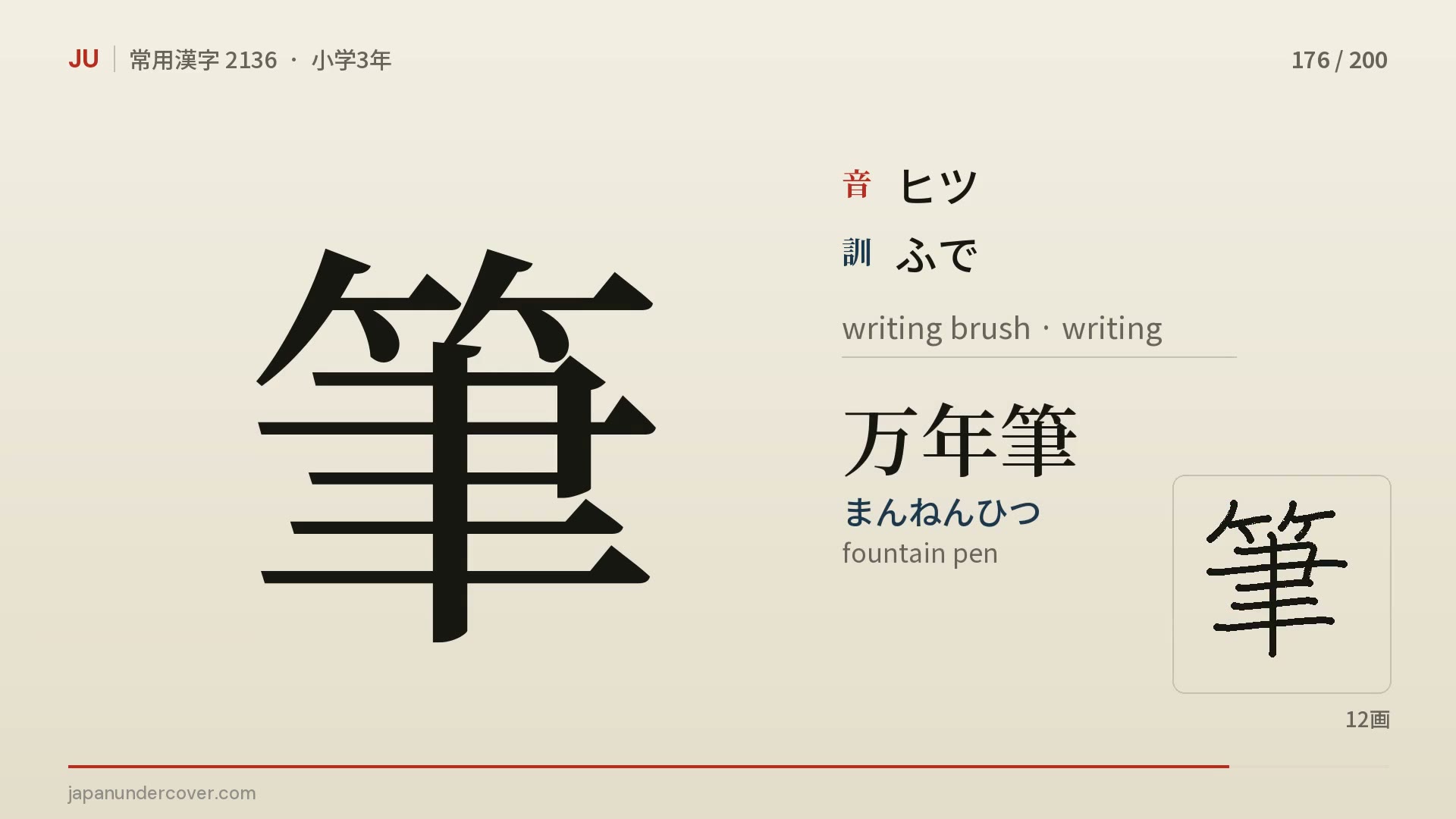
200 more kanji, 440 in all. Readings, example words and stroke order for every one.
440kanji so far, of 2,136+200 in grade 3
 Language
Joyo kanji / Grade 4
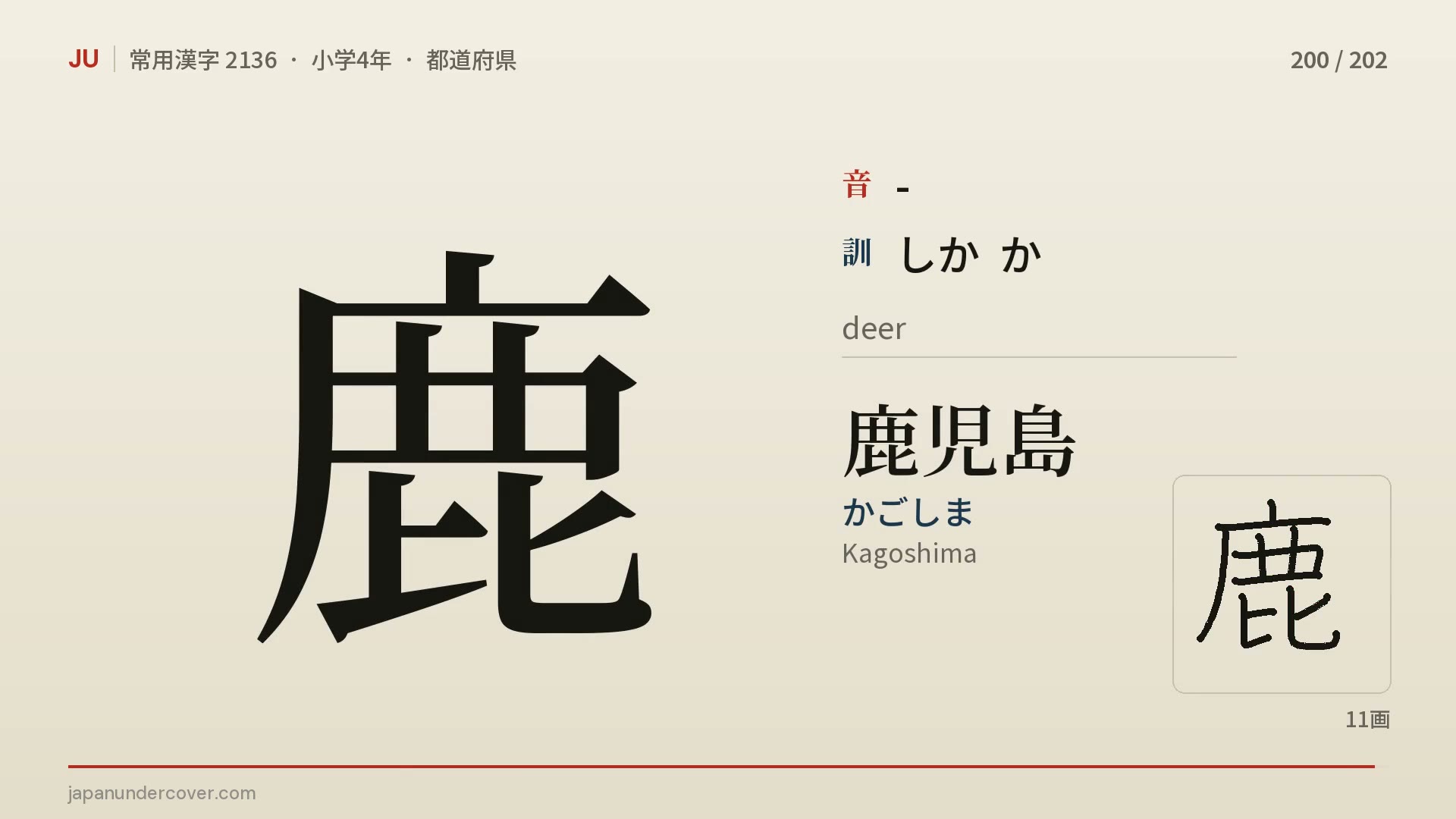
All 202 grade 4 kanji, ending with the 20 prefecture kanji from 茨城 to 沖縄.
642kanji so far, of 2,136+202 in grade 4
 Language
Joyo kanji / Grade 5
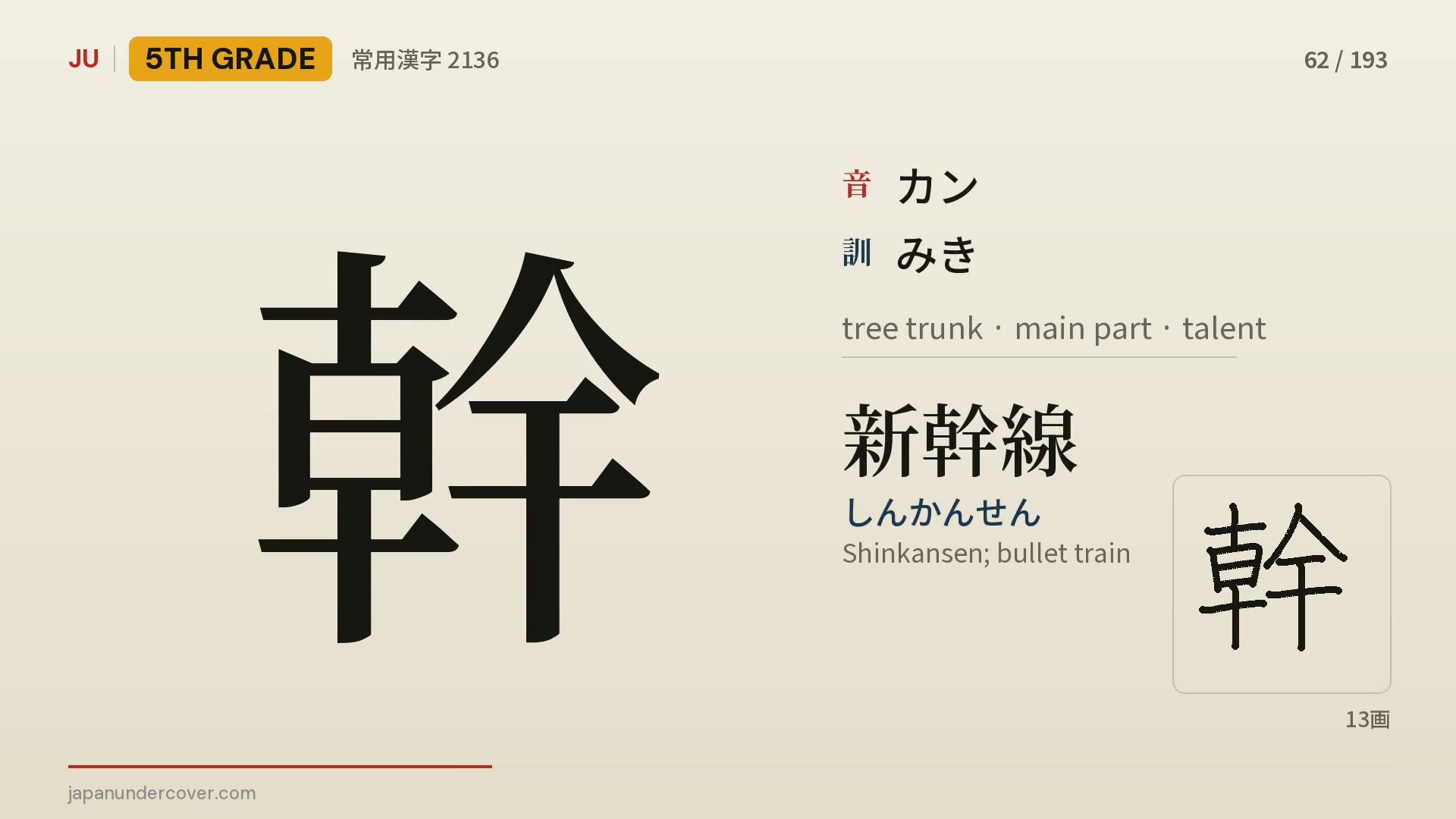
All 193 grade 5 kanji, including the 21 that moved up from grade 4 when the prefecture kanji came in.
835kanji so far, of 2,136+193 in grade 5
 Language
Joyo kanji / Grade 6
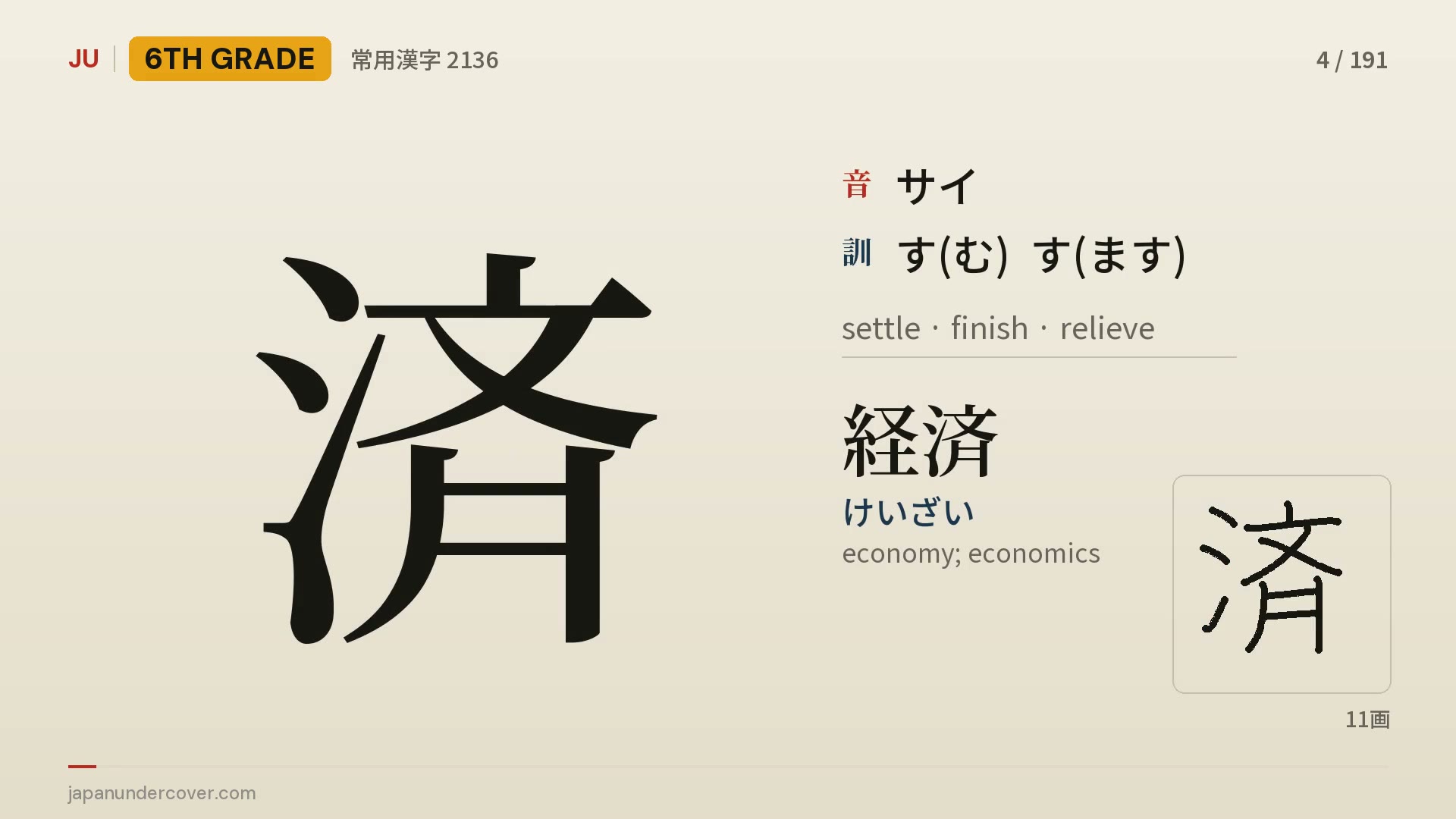
All 191 grade 6 kanji, completing the elementary school list at 1,026. 経済 finally arrives.
1,026kanji so far, of 2,136+191 in grade 6
 Language
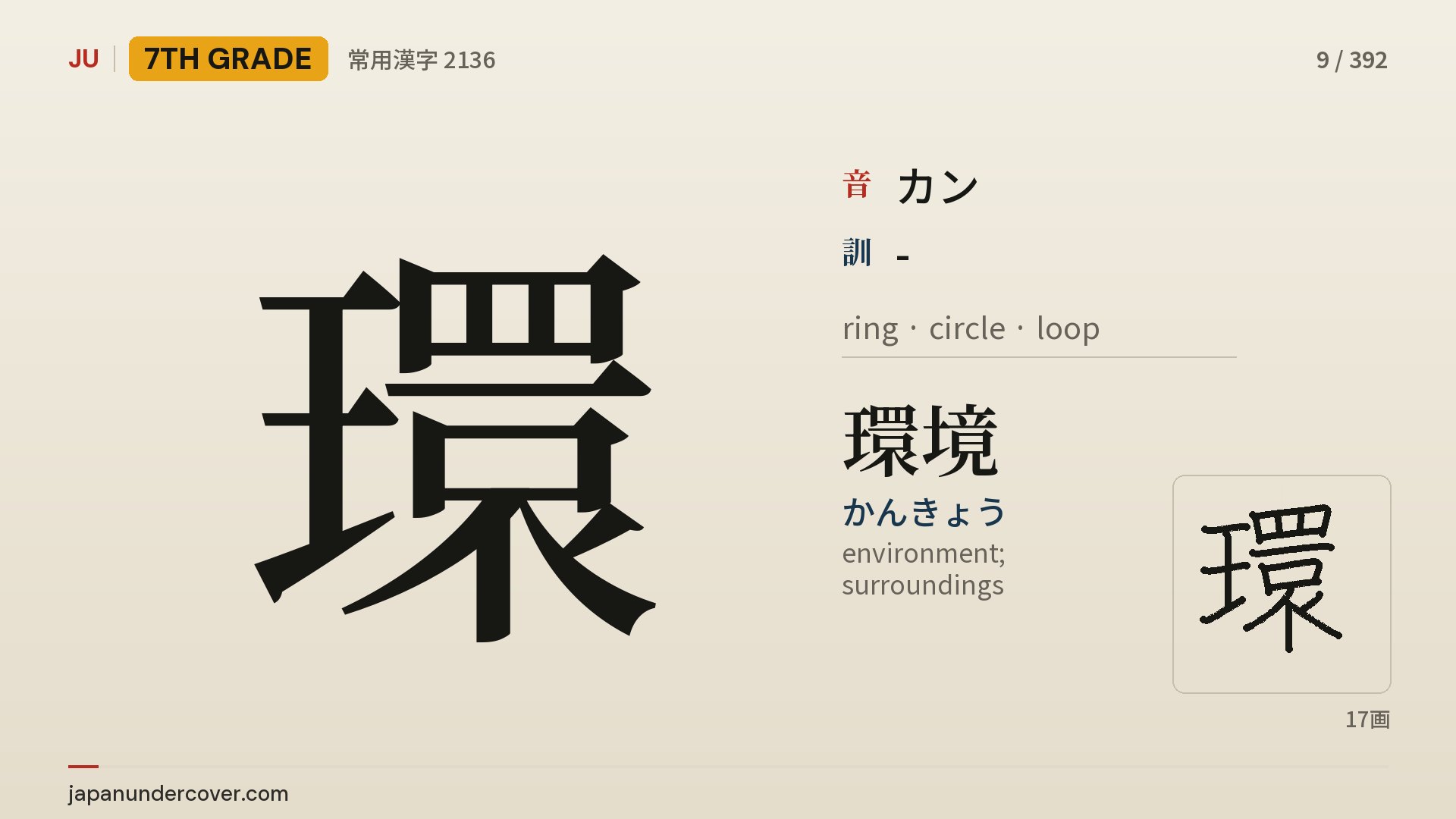
Joyo kanji / Grade 7
392 kanji past the elementary list, 1,418 in all. Readings, example words and stroke order for every one.
1,418kanji so far, of 2,136+392 in grade 7
 Language
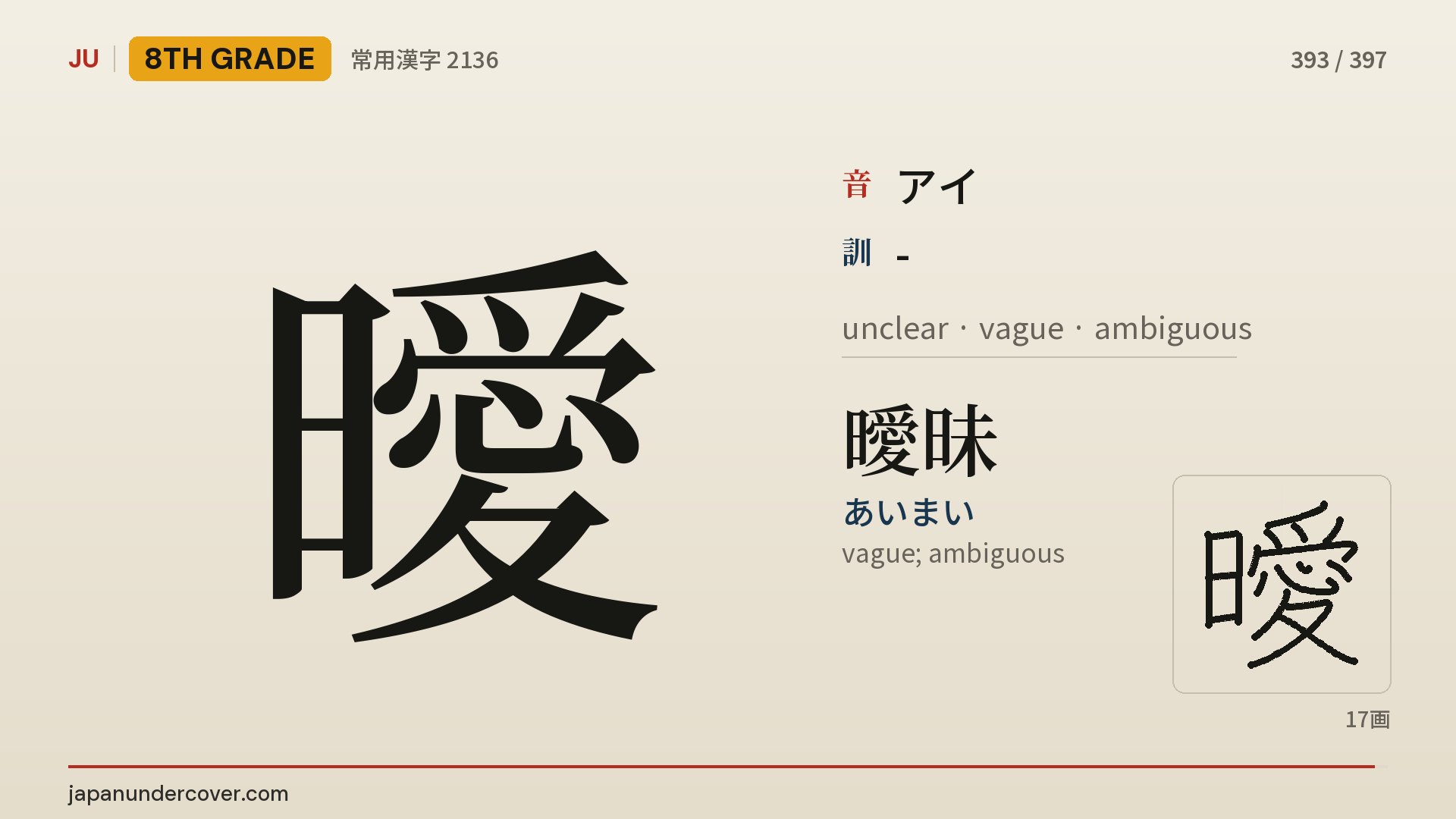
Joyo kanji / Grade 8
397 more kanji, 1,815 in all. Nearly half have no kun reading, so the words do the teaching.
1,815kanji so far, of 2,136+397 in grade 8
 Language
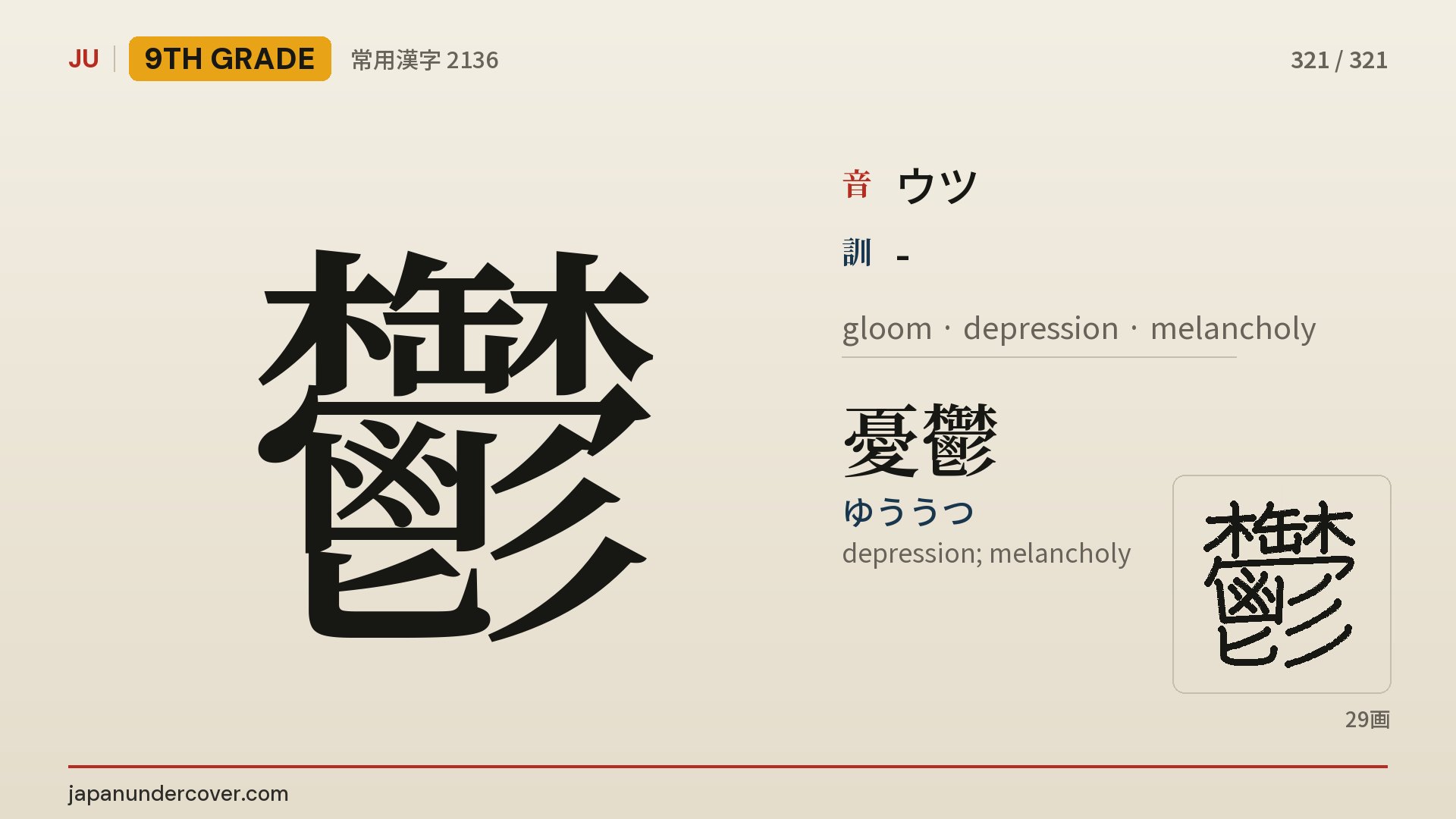
Joyo kanji / Grade 9
The last 321 kanji complete all 2,136 jōyō kanji, ending on 鬱, 29 strokes.
2,136of 2,136: complete+321 in grade 9
Use it
The same Japanese, in the places you will meet it: the counter on a first trip, and the words people really say.
Travel course / With audio
The Japanese you will actually hear and say on a first trip to Japan. Lesson 1 is open: the passport desk and customs.
Phrasebook / Overheard Japanese
What the words mean, how they sound, and when people really say them.
Try it
Pick a subject, answer five questions, and keep your best score on this device. Each answer explains itself.
Japan Undercover on YouTube
Hiragana, katakana and the jōyō kanji grade by grade, with stroke order, readings and an example word for each. Plus Shorts on the words in today's Japanese news. Subscribe and the next one finds you.
From the field desk
No fixed format. No filler. Explained from Japanese sources.
News behind the language barrier / Language in the wild / History with consequences / Maps worth saving
Festival / Field note
A festival can be beautiful without becoming vague. The history, garments, and August ritual are the point.
 Language
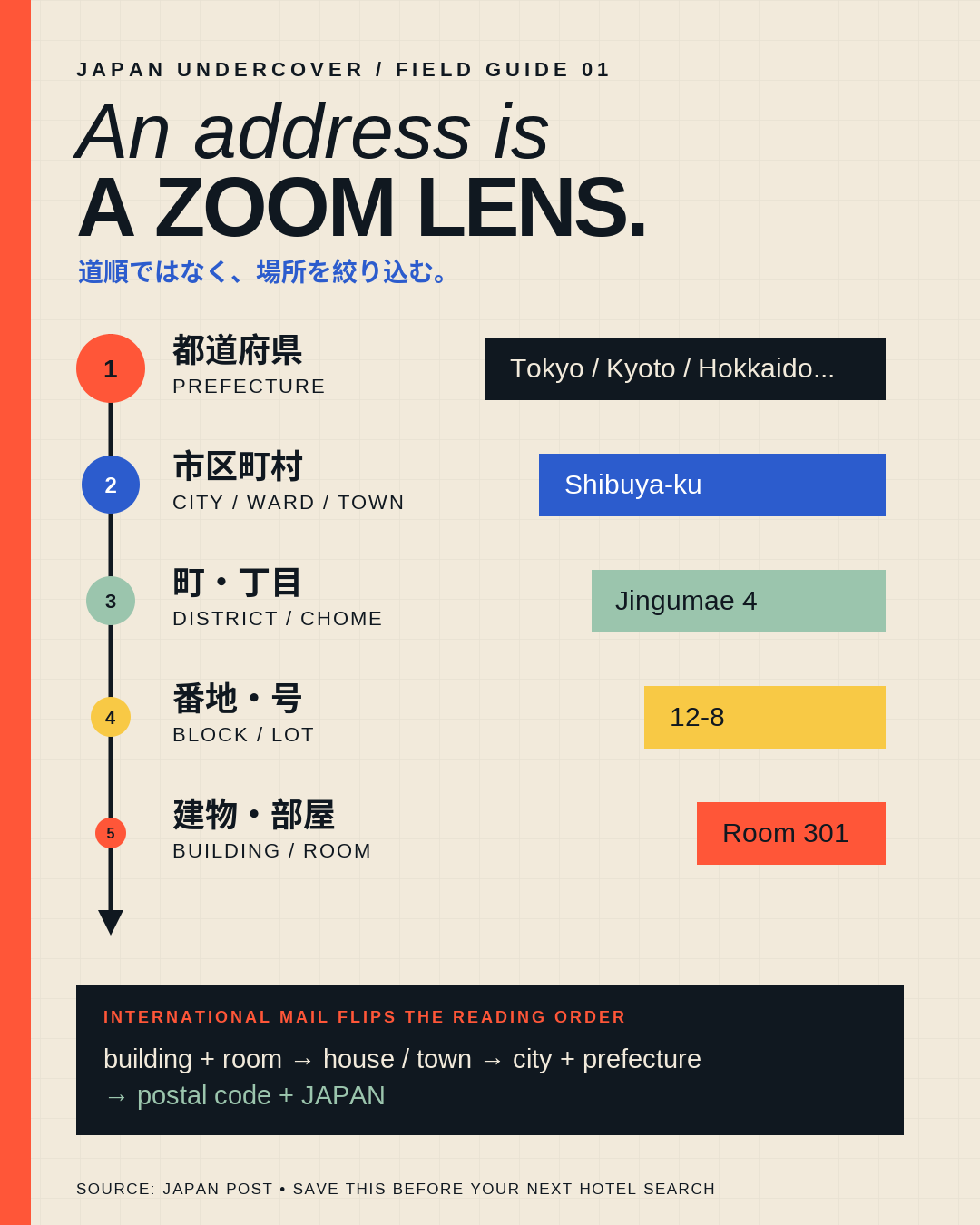
Addresses / Everyday Japan
Read the hierarchy, then learn why international mail flips the presentation.
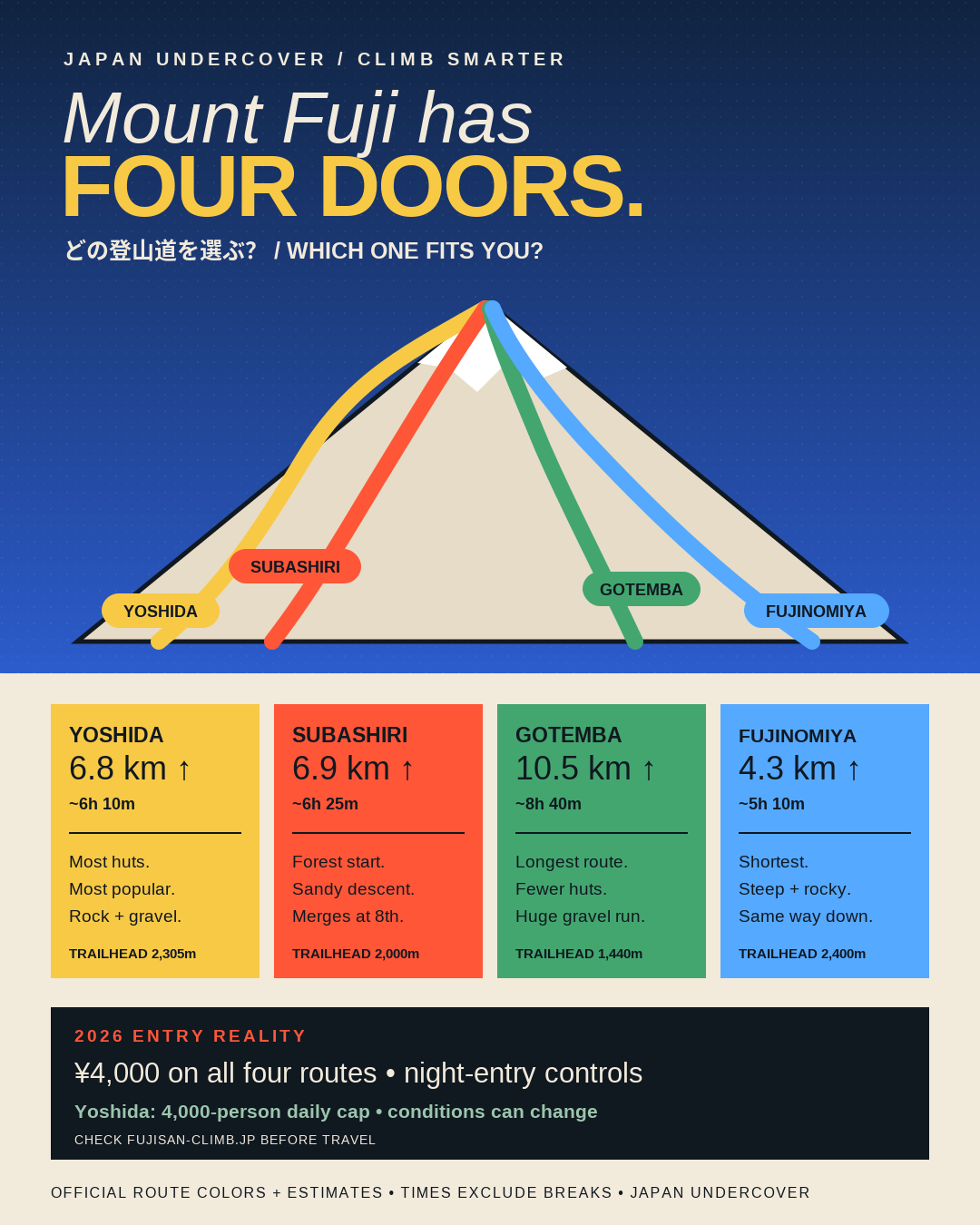 Travel
Mount Fuji / 2026
Distance, huts, terrain, entry fees, night controls, and the one route with a daily cap.
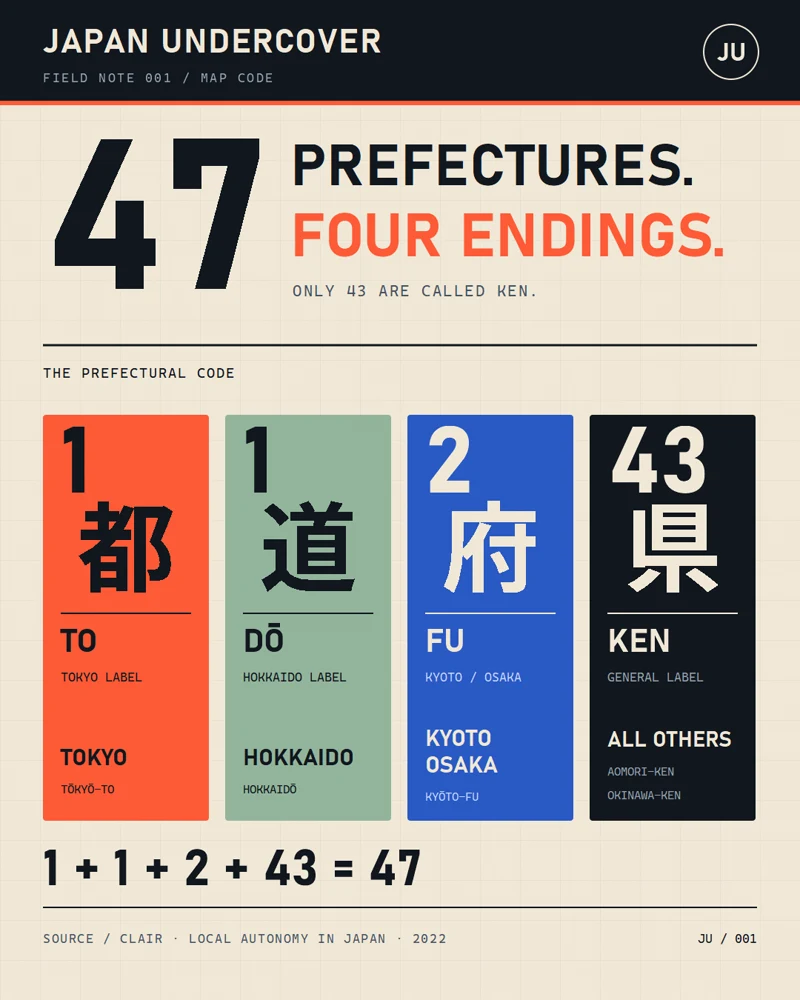 Geography
Prefectures / Geography
Regions, administrative logic, and the geography a Tokyo-only map leaves out.
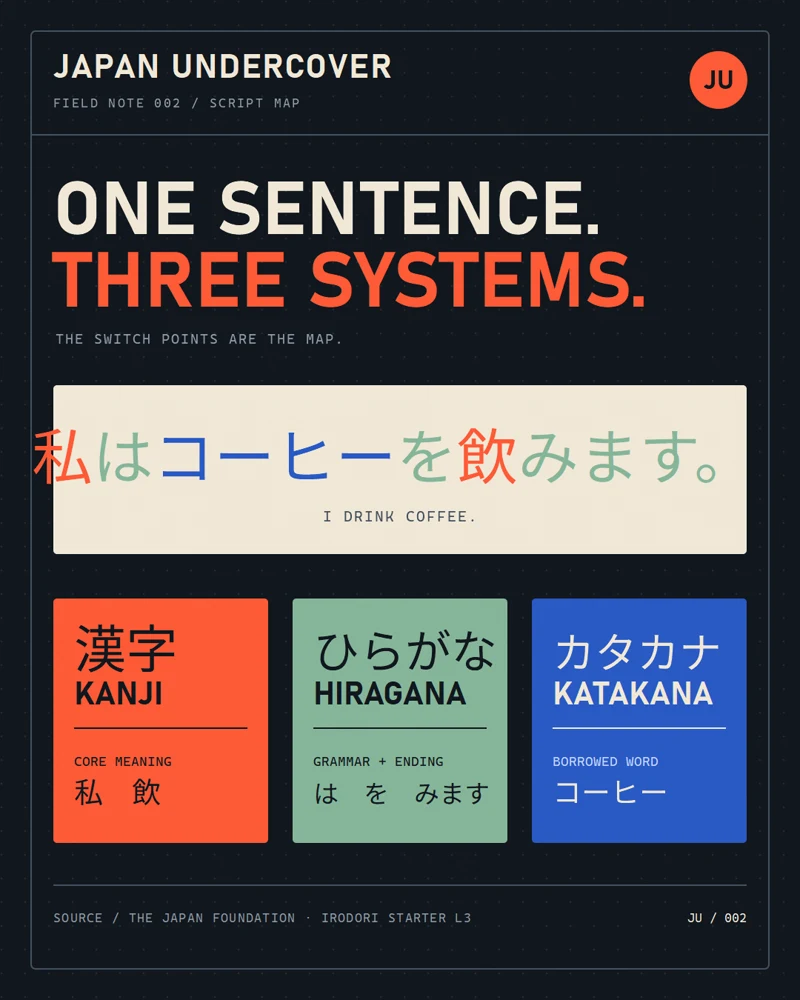 Language
Writing systems / Language
A visual entrance into kanji, hiragana, and katakana, including the jobs each system quietly performs.
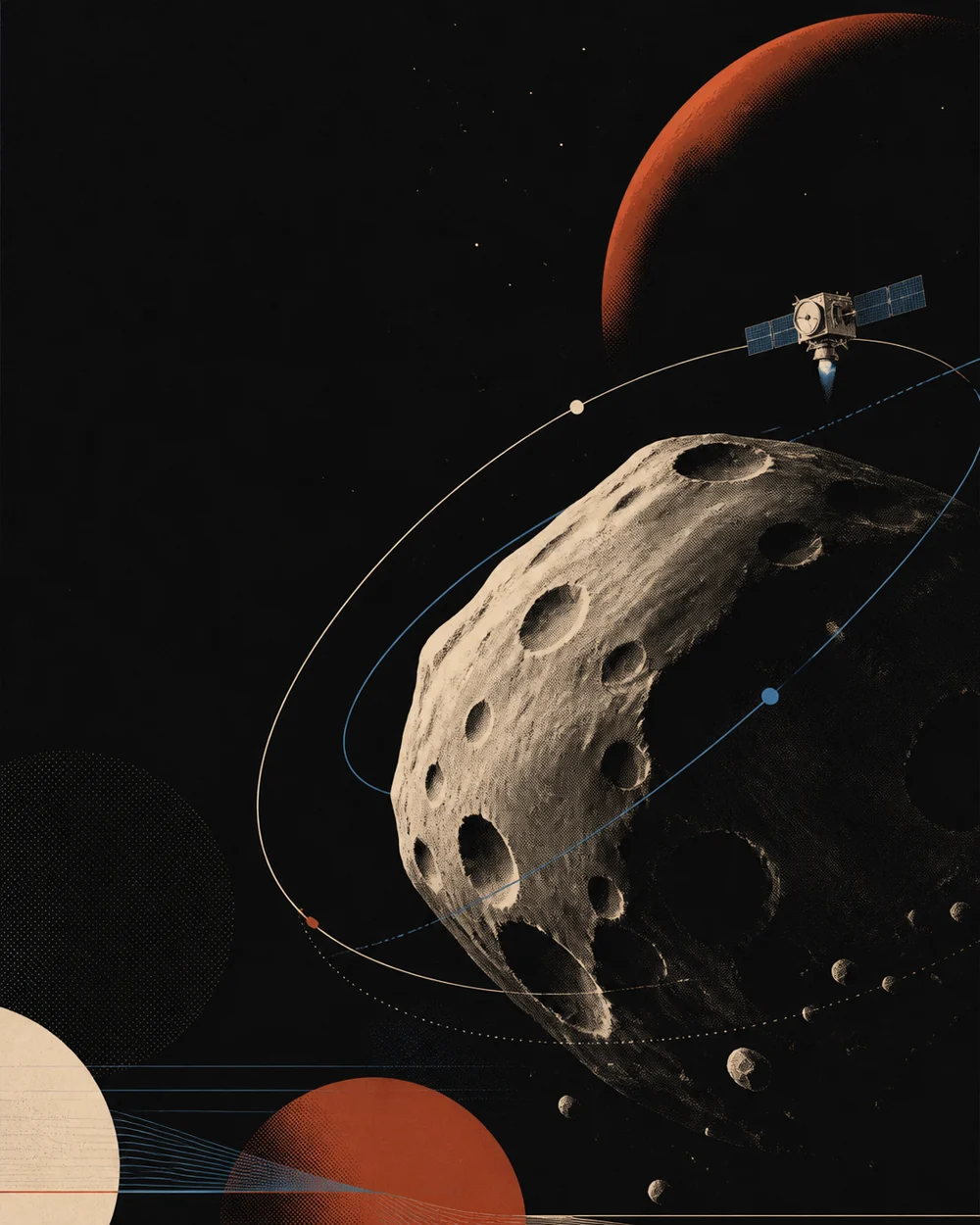 Space
MMX / Current affairs
H3 Flight 10 now has a planned launch time. The mission is chasing at least ten grams of Phobos.
Translation Desk
Japanese reporting often reaches American readers late, stripped of the assumptions local readers already know. We recover those assumptions before publishing.
Start with the Japanese ministry, municipality, university, court, company, or organizer.
Use a second source when the claim could change what someone believes or does.
Explain what a Japanese reader is assumed to know and an American reader probably is not.
Map, timeline, comparison, annotated image, or no visual at all if one would merely decorate.
Private dispatch list
A measured email when a story deserves more than a scroll. Only stories worth opening, with the missing context intact.
Field desk
The part that does not translate is usually the point.
News / Language / History / Culture
Dispatches built from Japanese receipts and selected for usefulness rather than volume. The goal is not more Japan content. It is better context.
Watch every study clip on YouTube ↗We log visits, including IP address and approximate location. More