
Words, not characters
避難 崩壊 占領 曖昧
Grade 8, in four words.
185 of the 397 kanji in grade 8 have no kun reading in the official list. A kanji like 渉 (as in 交渉, negotiations) or 療 (医療, medical treatment) has no everyday Japanese word of its own to hang on, so it turns up inside compounds. In this clip the example word does the teaching.
Both halves arrive
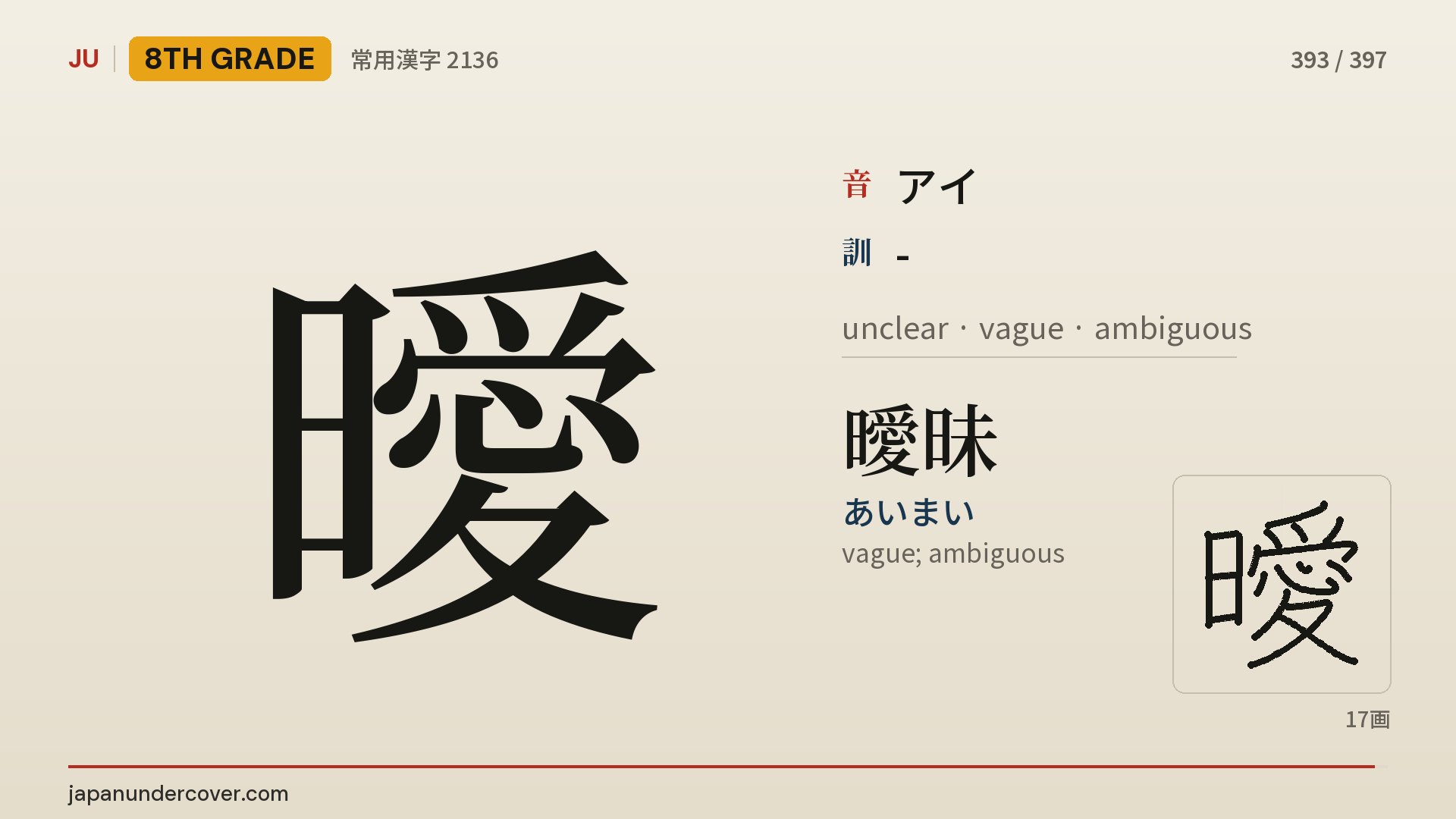
曖昧 (vague) lands as two cards in a row: 曖 and 昧, cards 393 and 394. 氾濫 (overflowing) closes the grade: 濫 is card 396 and 氾 is the last, 397. The jōyō list includes both characters of each, so neither word is left half learned.
No official list, again
Japan sets no kanji list for each junior high year. Grade 8 follows the new-kanji tables of one 2025 junior high Japanese textbook for year 2: 397 kanji. It is that publisher's choice, not a national rule.
Heavy and light
鑑 takes 23 strokes, the second most on the whole jōyō list after 鬱, which waits in grade 9. The fewest in this grade: 又, with 2.
How to use the clip
Each character appears alone first; say it before the voice does. The kanji come in order of how common they are, so grade 8 opens with 渉 and 突 and ends on 氾. The readings shown and spoken are the official ones from the 2010 常用漢字表, and every example word uses only kanji introduced at or before that card.
1,815 down, 321 to go.