You hear this
パスポートをお願いします。
パスポートをおねがいします。
Pasupōto o onegai shimasu.
Your passport, please.
お願いします is the polite "please" you will hear at every counter in Japan. Hand over the passport; a small nod is plenty.
 Japan UndercoverWatch on YouTube
First Trip / Lesson 1 of 10
Two desks stand between you and Japan. Here is what they say, and what you say back.
The scene: The passport desk at Narita, then the customs desk.
パスポートをお願いします。
Pasupōto o onegai shimasu.
Lesson done
Panel 1
Tap a bubble to hear it.
Panel 2
Tap a bubble to hear it.
Panel 3
Tap a bubble to hear it.
Panel 4
Tap a bubble to hear it.
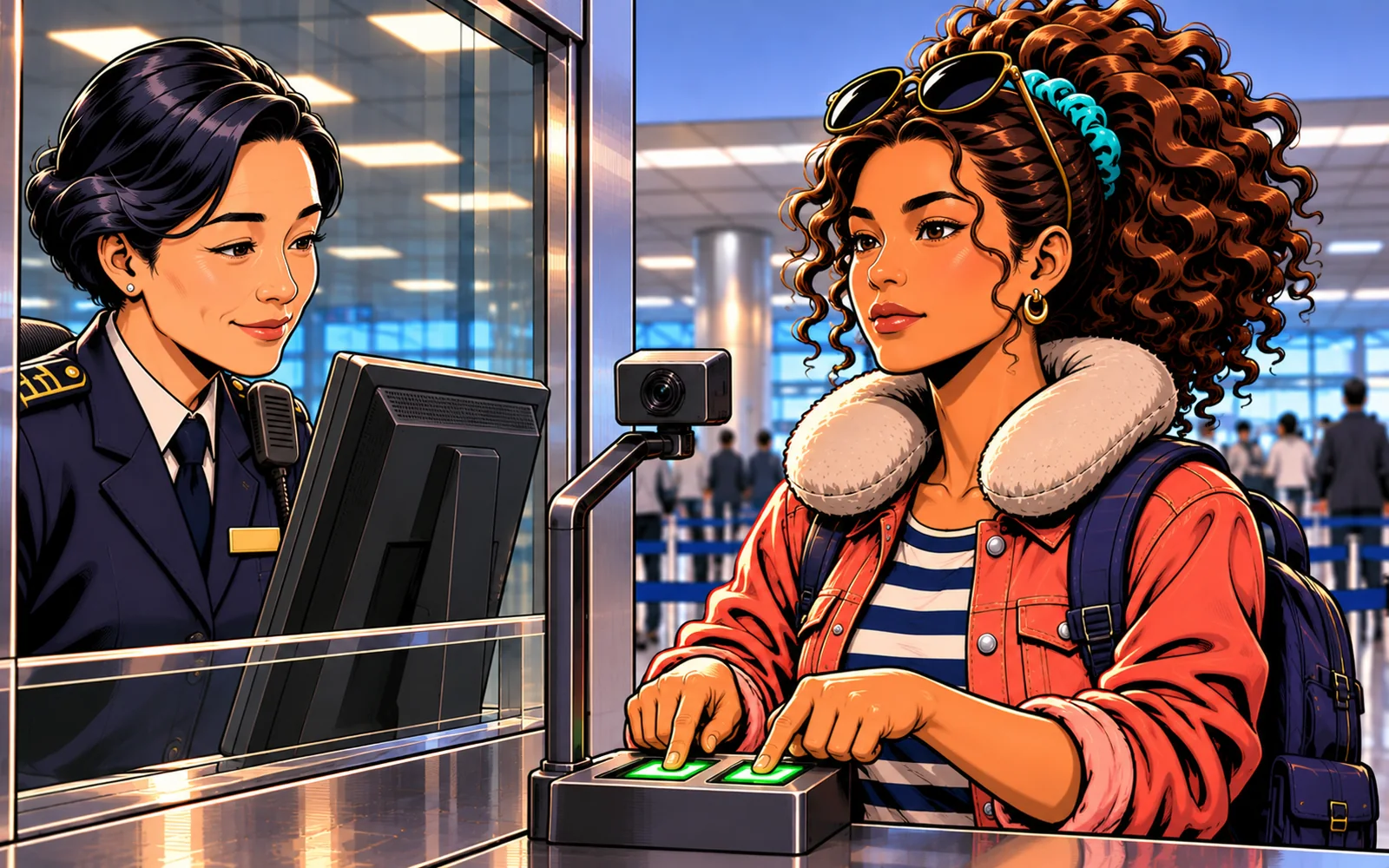
Panel 5
Tap a bubble to hear it.
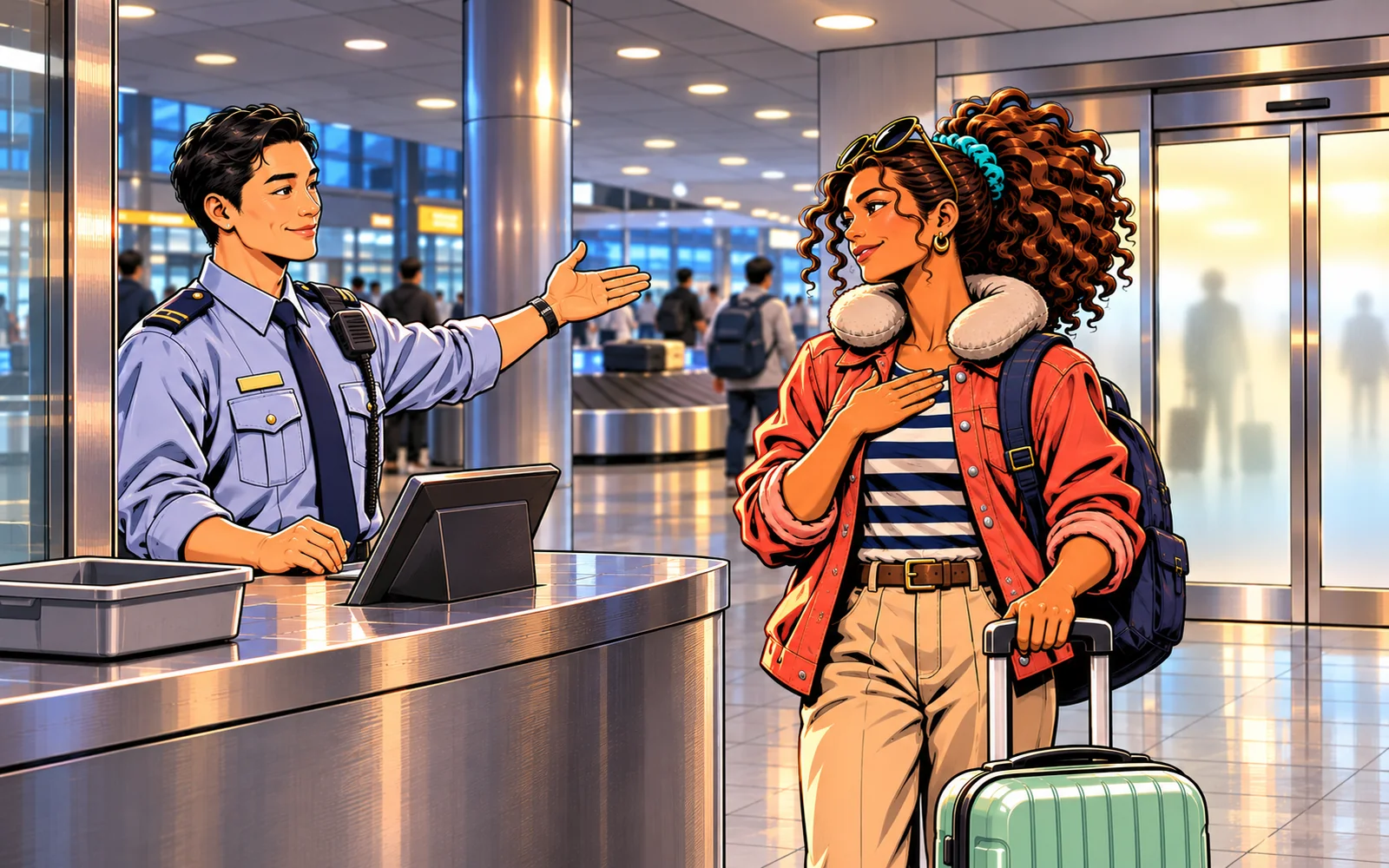
Panel 6
Tap a bubble to hear it.
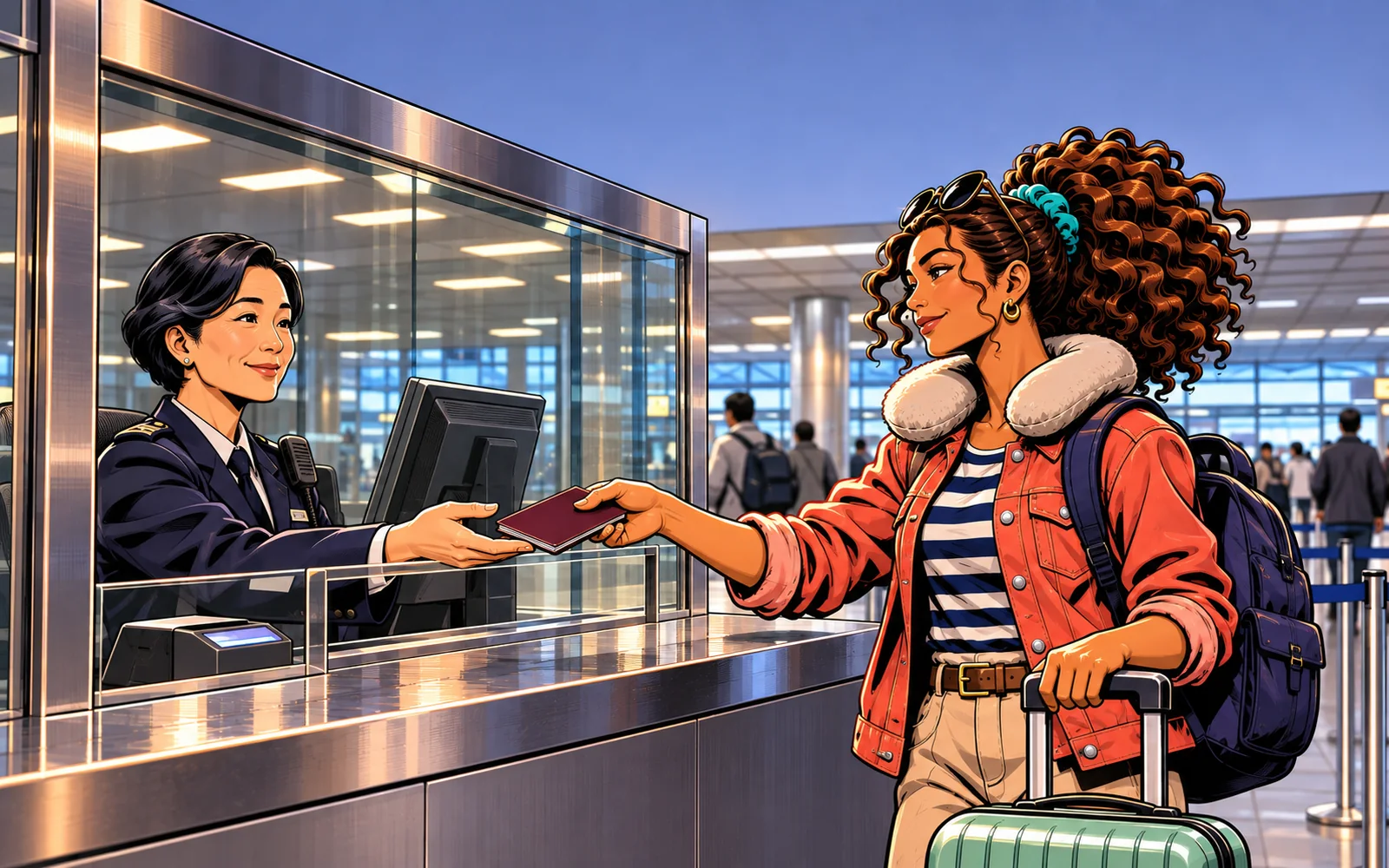
パスポートをお願いします。
パスポートをおねがいします。
Pasupōto o onegai shimasu.
Your passport, please.
お願いします is the polite "please" you will hear at every counter in Japan. Hand over the passport; a small nod is plenty.
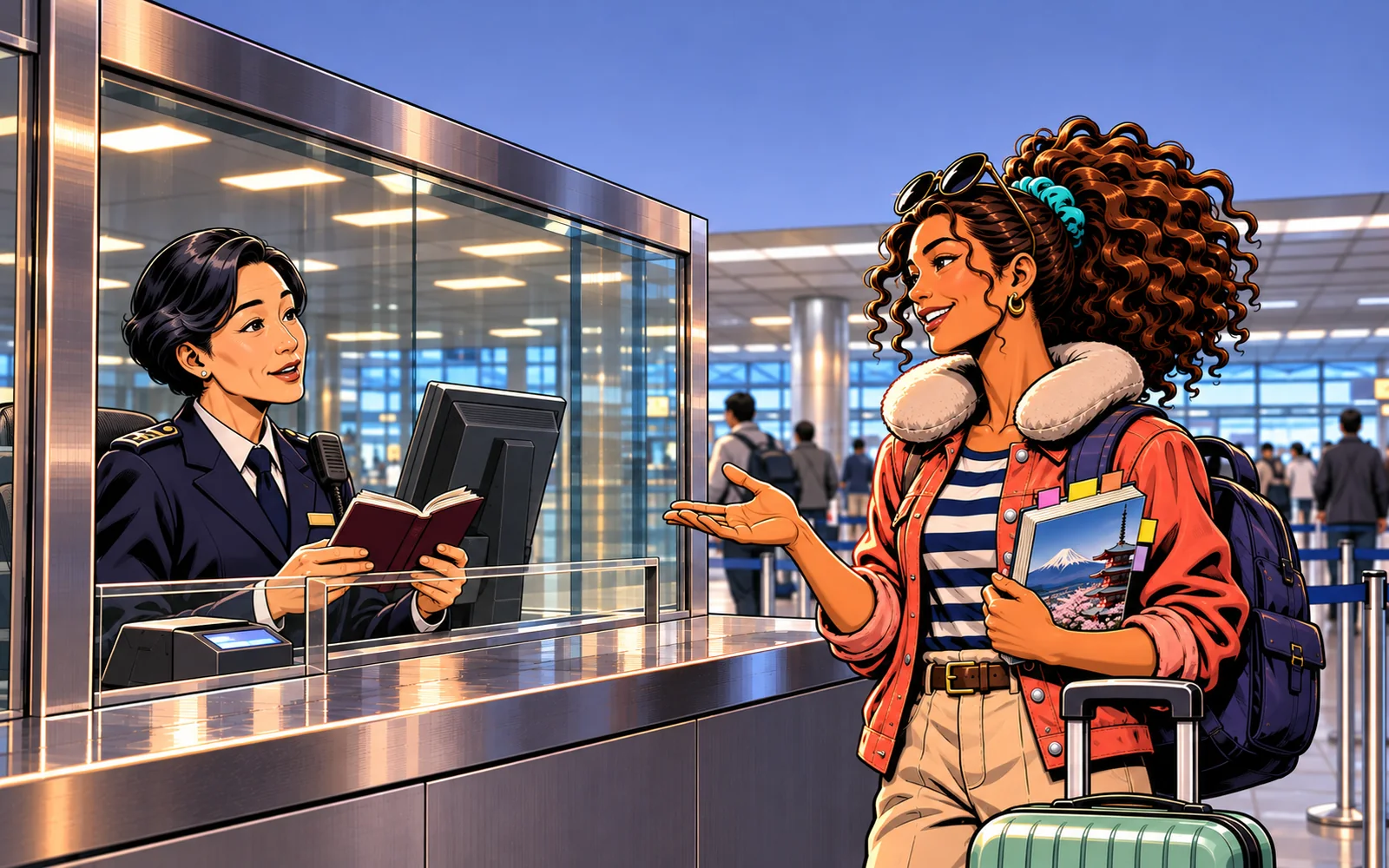
はい、どうぞ。
Hai, dōzo.
Here you are.
どうぞ is what you say when you hand something over. Short, polite, done.
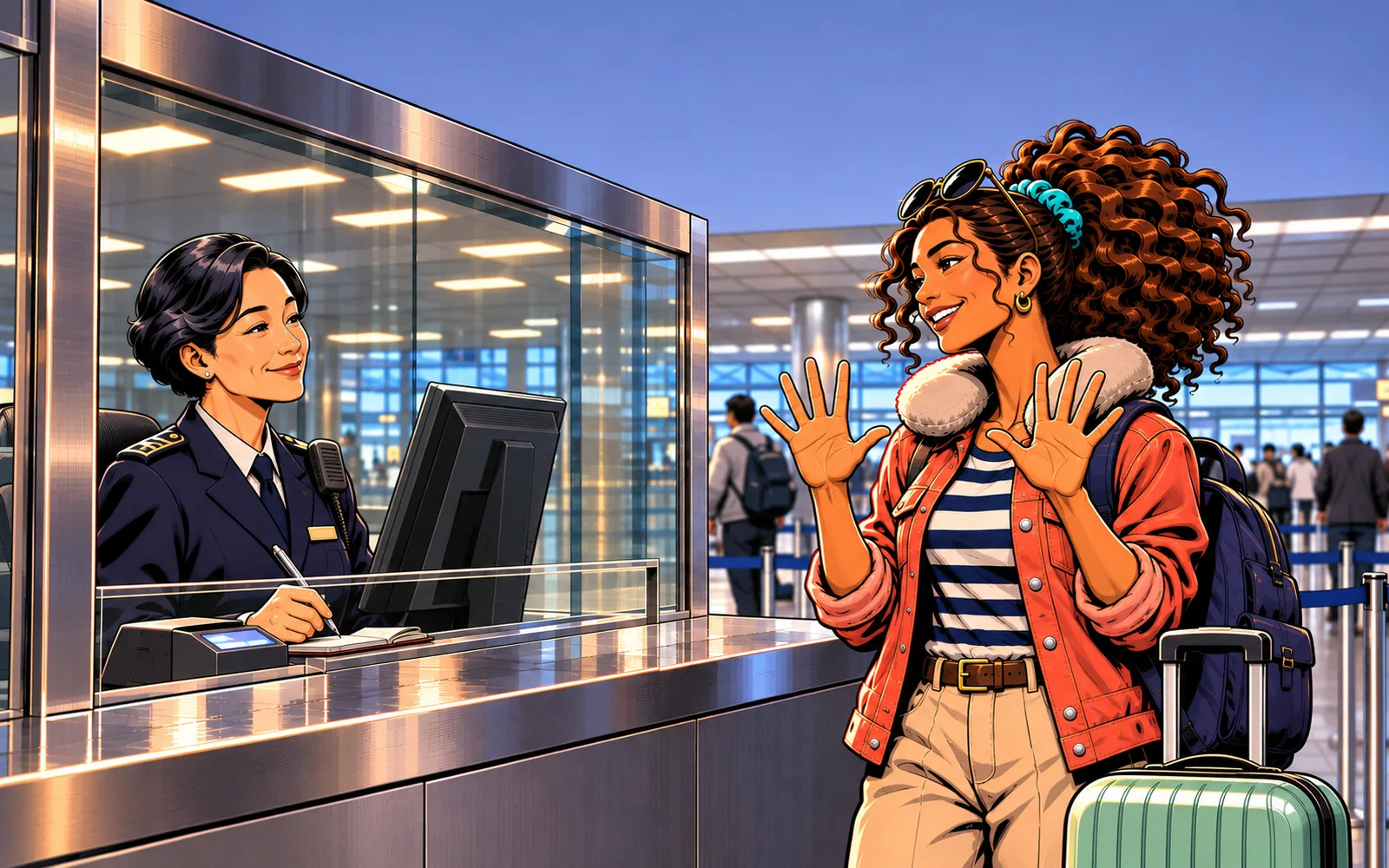
旅行の目的は何ですか。
りょこうのもくてきはなんですか。
Ryokō no mokuteki wa nan desu ka.
What is the purpose of your trip?
目的 (mokuteki) means "purpose". Many officers ask nothing or use English; these are the lines for when they do not.
観光です。
かんこうです。
Kankō desu.
Sightseeing.
観光 is sightseeing. 観光です is already a whole, polite answer.
何日間滞在しますか。
なんにちかんたいざいしますか。
Nannichikan taizai shimasu ka.
How many days will you stay?
滞在 (taizai) is staying on a trip, and it is the word on the arrival card. 何日間 is "how many days".
十日間です。
とおかかんです。
Tōkakan desu.
Ten days.
十日 is read とおか, not じゅうにち. Add 間 (かん) and it means "for ten days".
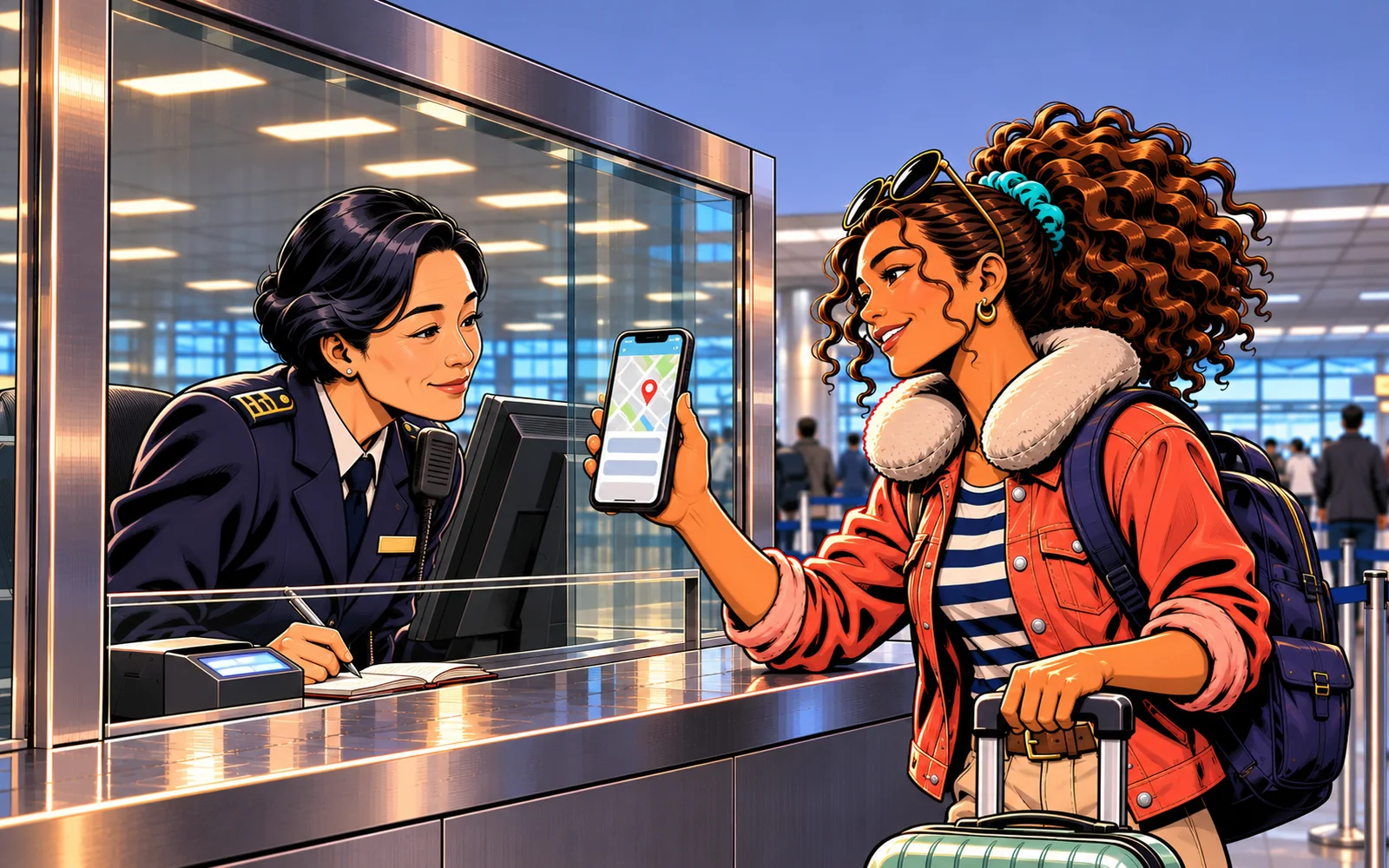
どちらに泊まりますか。
どちらにとまりますか。
Dochira ni tomarimasu ka.
Where will you be staying?
泊まる (tomaru) is staying overnight. You can answer with just the place.
新宿のホテルです。
しんじゅくのホテルです。
Shinjuku no hoteru desu.
At a hotel in Shinjuku.
新宿のホテル is "a hotel in Shinjuku": place, then の, then what it is. Swap in another place from the box below.
こちらに指を置いてください。
こちらにゆびをおいてください。
Kochira ni yubi o oite kudasai.
Place your fingers here, please.
No answer needed, you just do it. …てください is a polite "please do …".
カメラを見てください。
カメラをみてください。
Kamera o mite kudasai.
Look at the camera, please.
Same …てください pattern. 見る (miru) is "to look".
Scene change: the customs desk.
申告するものはありますか。
しんこくするものはありますか。
Shinkoku suru mono wa arimasu ka.
Do you have anything to declare?
申告 (shinkoku) is "declaring" and もの is "a thing", so it asks if you have things to declare.
いいえ、ありません。
Iie, arimasen.
No, nothing.
いいえ is "no" and ありません is "there is none". If you do have something, the answer is はい、あります。 (Hai, arimasu.)
ありがとうございます。
Arigatō gozaimasu.
Thank you.
The polite thank-you that is safe everywhere. Say it as you walk off.
The officer talks. You answer. Pick a reply, then read why each one works or does not. The last one is listening only.
The officer says
パスポートをお願いします。
パスポートをおねがいします。
Pasupōto o onegai shimasu.
Your passport, please.
Pick your reply
OffGood Japanese, wrong moment. Nothing has been handed to you yet. Save it for when your passport comes back.
FitsYes. はい is "yes, sure" and どうぞ is "here you go" as you hand it over.
OffThat is the officer's word to you. Say it back and you are asking them for something.
The officer says
旅行の目的は何ですか。
りょこうのもくてきはなんですか。
Ryokō no mokuteki wa nan desu ka.
What is the purpose of your trip?
Pick your reply
Off結構です (kekkō desu) means "no thanks, I am fine". It sounds a lot like 観光 (kankō), but it answers a different question.
OffThe ending か turns it into a question: "Is it sightseeing?" You are the one answering, so drop the か.
FitsYes. 観光 is sightseeing and です makes it polite. Short and complete.
The officer says
何日間滞在しますか。
なんにちかんたいざいしますか。
Nannichikan taizai shimasu ka.
How many days will you stay?
Pick your reply
OffThat is "ten o'clock". 時 (ji) counts hours on the clock, not days.
FitsYes. 十日 is read とおか and 間 turns it into "for ten days".
OffThat is "ten people". 人 (nin) counts people, and the officer asked about days.
The officer says
どちらに泊まりますか。
どちらにとまりますか。
Dochira ni tomarimasu ka.
Where will you be staying?
Pick your reply
FitsYes. Place, の, hotel, です. It tells them exactly where you will sleep.
OffThat says "I came from Shinjuku". Real Japanese, but it answers "where are you from", not "where will you stay".
OffThat says "I am going to Shinjuku". Close, but they asked where you are staying (泊まる), so name the hotel.
The story For this practice, assume you have checked the declaration requirements and have nothing to declare.
The officer says
申告するものはありますか。
しんこくするものはありますか。
Shinkoku suru mono wa arimasu ka.
Do you have anything to declare?
Pick your reply
OffPerfect Japanese for the opposite situation: "Yes, I do." Use it only if you really have something to declare.
Offわかりません means "I do not understand". It sounds a bit like ありません, but it does not mean "I have none".
FitsYes. いいえ is "no" and ありません is "there is none".
The situation
Customs is done and the officer lets you through. You are on your way. Say thanks.
Pick your reply
OffThat is what you say before you eat. It is not a thank-you for a desk.
FitsYes. The polite thank-you works at every counter and desk in Japan.
Offごめんなさい is "I am sorry". Nobody did anything wrong here, so thank them instead.
Listening only
Press Play. No text this time, just your ears.
What did the officer say?
OffThat is the line after this one. カメラ (kamera) is the word for camera, and it is not in what you heard. Listen for 指 (yubi), a finger.
OffThat is the first line of the lesson. パスポート (pasupōto) is the word to wait for, and it is not in this one.
FitsYes. 指 (yubi) is a finger and 置いて (oite) is put or place, so it asks you to put your fingers here.
What you heard
こちらに指を置いてください。
こちらにゆびをおいてください。
Kochira ni yubi o oite kudasai.
Lesson done. That is the whole passport desk, and the first tick on your trip.
Same sentence, different trip. Change the answer and you are still polite.
仕事です。
しごとです。
Shigoto desu.
Business.
三日間です。
みっかかんです。
Mikkakan desu.
Three days.
一週間です。
いっしゅうかんです。
Isshūkan desu.
One week.
二週間です。
にしゅうかんです。
Nishūkan desu.
Two weeks.
友だちの家です。
ともだちのいえです。
Tomodachi no ie desu.
A friend's home.
京都のホテルです。
きょうとのホテルです。
Kyōto no hoteru desu.
At a hotel in Kyoto.
If the officer goes too fast, say one of these and keep smiling.
すみません、もう一度お願いします。
すみません、もういちどおねがいします。
Sumimasen, mō ichido onegai shimasu.
Sorry, once more please.
ゆっくりお願いします。
ゆっくりおねがいします。
Yukkuri onegai shimasu.
Slowly, please.
Only when there is one worth sending. Your address is used for Japan Undercover updates. Unsubscribe at any time.
We log visits, including IP address and approximate location. More