
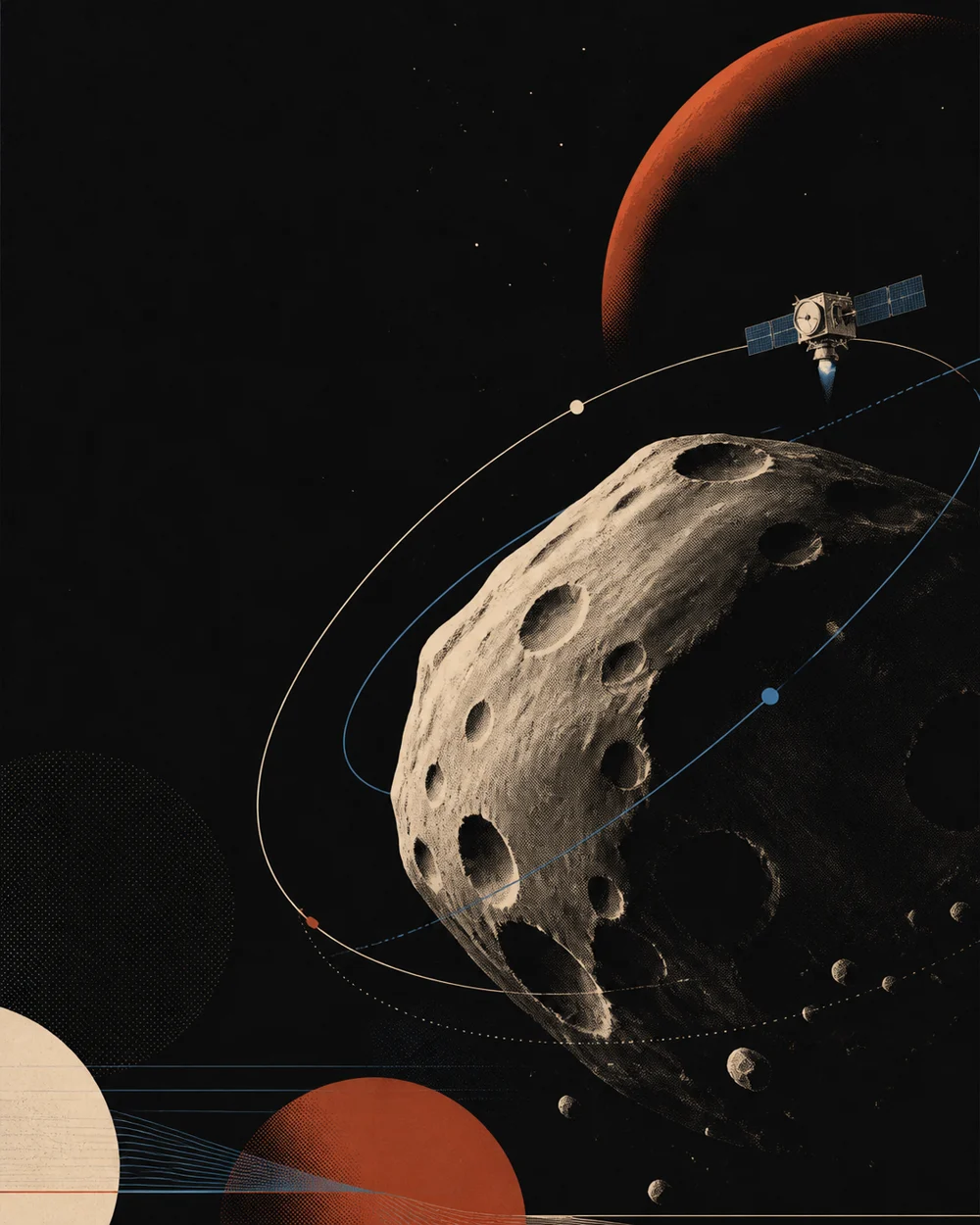
The clock is now specific
火星ではない。フォボスだ。
Not Mars. Phobos.
JAXA says H3 Flight 10 is planned to lift off from Tanegashima Space Center on October 20, 2026, at 4:41:03 a.m. Japan Standard Time. The backup period runs from October 21 through November 7. Planned is the operative word: weather, hardware, and range conditions still get a vote.
What MMX is trying to bring home
The Martian Moons eXploration mission is designed to visit both Phobos and Deimos, land on Phobos, and return at least ten grams of material to Earth. JAXA describes it as an approximately five-year mission and the first planned sample return from the Mars system.
Why those ten grams matter
Scientists are still testing whether Mars's moons are captured asteroids or material assembled after a major impact around Mars. A laboratory sample can preserve mineral, chemical, and chronological evidence that remote observations cannot fully replace. Ten grams sounds comic until each grain becomes a witness.
What to watch next
- Whether JAXA keeps the October 20 launch target as final preparations advance.
- How the H3 rocket and MMX spacecraft clear their launch-readiness gates.
- What the mission learns about the origin of Phobos before the sample capsule returns.